Explore our network of country and industry based websites to access localized information, product offerings, and business services across our group.
Log in to start sending quotation requests for any product.
Don't have an account? Sign Up Here
Home Sodium Hydrogen Phosphate: B2B Procurement and Market Insights
Trade Insights | Applications and Buyers | 21 August 2026
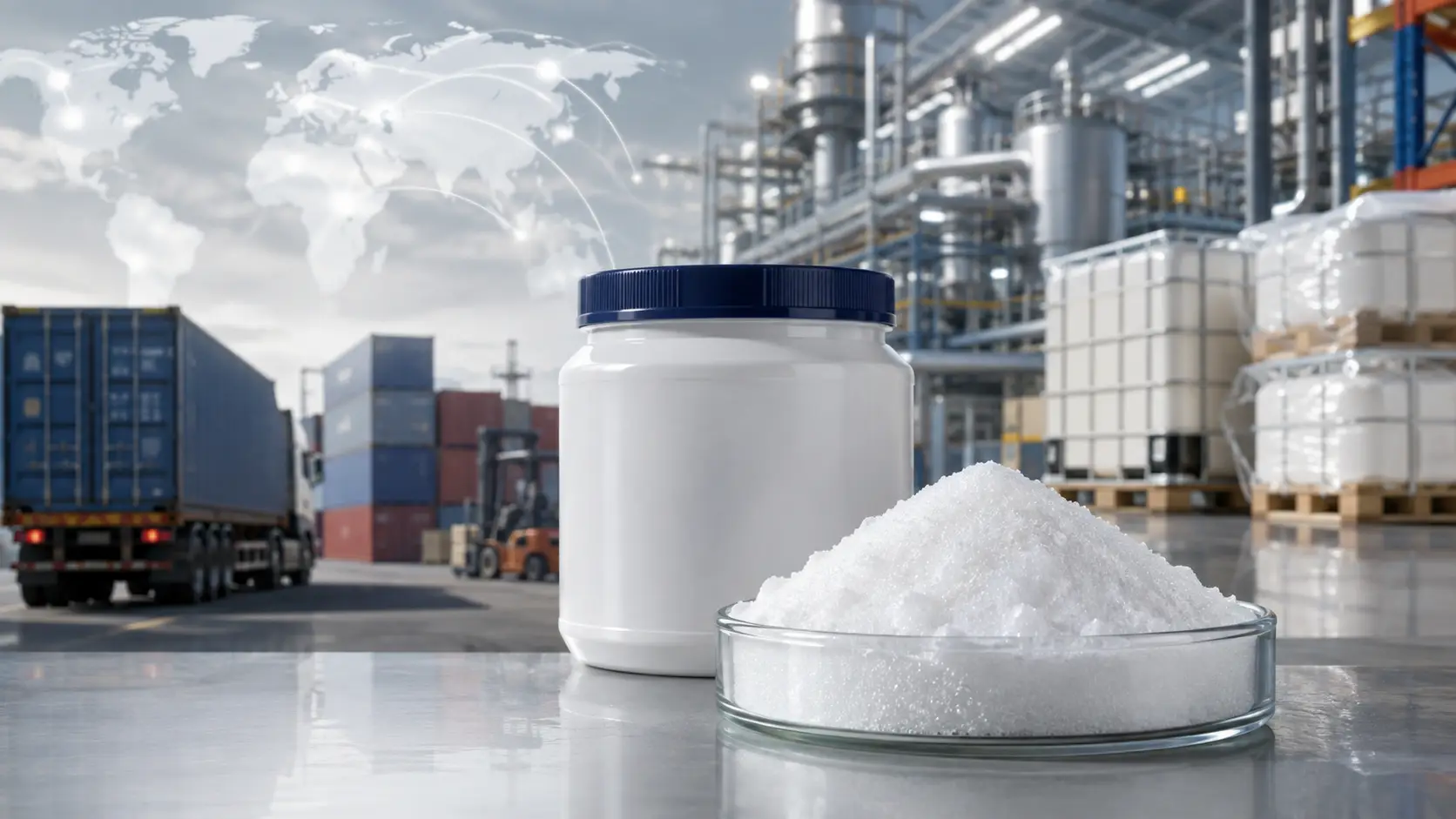
Sodium Hydrogen Phosphate in the B2B Chemical Market
Food Processing Applications and Functional Value
Pharmaceutical and Healthcare Applications
Industrial and Technical Applications
Key Sodium Hydrogen Phosphate Buyers
Procurement and Supplier Selection Factors
B2B Sourcing and Distribution Considerations
Conclusion: Building a Reliable Supply Strategy
Sources
Sodium hydrogen phosphate, commonly associated with disodium hydrogen phosphate in commercial applications, is an important phosphate-based chemical used where buffering, stabilization, sequestration, and moisture-management functions are required. Its relevance extends across food processing, pharmaceutical formulation, laboratory applications, and selected industrial processes, making it a practical product for B2B chemical sourcing programs.
For procurement teams, the product is less about simple chemical availability and more about obtaining a consistent grade suited to the intended application. Food processors, pharmaceutical manufacturers, distributors, and industrial users may have different expectations concerning specification, documentation, packaging, and regulatory suitability. This creates a market where supplier capability and application knowledge can influence purchasing decisions alongside price.
Sodium hydrogen phosphate is particularly relevant where controlled chemical functionality is needed rather than merely bulk material supply. Codex Alimentarius identifies disodium hydrogen phosphate as food additive INS 339(ii), demonstrating its established position within international food-additive standards. For B2B buyers, this regulatory recognition provides an important reference point when evaluating food-grade sourcing opportunities.
The commercial opportunity therefore centers on dependable supply, suitable specifications, and efficient distribution. Buyers seeking sodium hydrogen phosphate typically benefit from suppliers capable of supporting recurring industrial requirements while maintaining clear product documentation and consistent communication throughout the procurement cycle.
Food processing is one of the most commercially relevant application areas for sodium hydrogen phosphate. Phosphate ingredients can perform technical functions such as stabilization, moisture retention, acidity management, and sequestration depending on the specific formulation and applicable food standard. Codex documentation lists disodium hydrogen phosphate under INS 339(ii) and identifies technological functionality associated with phosphate additives.
For food manufacturers, the purchasing decision is closely connected to application requirements. Dairy processors, prepared-food manufacturers, beverage formulators, and other food businesses may evaluate phosphate ingredients according to formulation performance, grade, purity, documentation, and regulatory acceptance in their target market. The correct specification must therefore be matched to the finished product and applicable regulations rather than selected only on price.
Sodium phosphate ingredients can contribute to controlled formulation performance by helping manage chemical conditions within food systems. PubChem records sodium phosphate functional classifications including acidity regulation, sequestration, and stabilization, illustrating why phosphate compounds remain useful formulation tools. For B2B buyers, these functions translate into demand from manufacturers seeking predictable processing characteristics.
Food-grade procurement also requires careful attention to traceability and documentation. Buyers commonly need product specifications, certificates of analysis, packaging details, and regulatory information appropriate to their destination market. Suppliers that can combine technical documentation with reliable logistics are therefore better positioned to support food-industry purchasing programs.
Sodium hydrogen phosphate also has relevance in pharmaceutical and healthcare-related applications, where phosphate salts can be used in formulations and controlled chemical systems. Certain disodium phosphate forms are documented in pharmaceutical contexts, including specific healthcare applications. This makes pharmaceutical buyers a distinct segment requiring closer specification control than many general industrial customers.
Pharmaceutical procurement places significant emphasis on identity, purity, consistency, documentation, and suitability for the intended formulation. Buyers may therefore assess suppliers according to technical specifications, quality systems, batch documentation, and packaging controls. The commercial value of a supplier is consequently determined by more than its quoted unit price.
For distributors serving healthcare and pharmaceutical customers, maintaining clear differentiation between grades is particularly important. A buyer may require a specific form or quality standard, and the supplier must communicate the applicable specification accurately. This reduces the risk of unsuitable material entering a controlled manufacturing process.
B2B suppliers can strengthen their pharmaceutical positioning by maintaining transparent documentation and dependable batch-to-batch supply. In competitive procurement environments, these factors can help reduce qualification friction and support longer-term relationships with manufacturers and specialized chemical distributors.
Beyond food and pharmaceutical uses, phosphate salts can serve a range of technical and industrial purposes. Commercial information recorded by PubChem associates disodium phosphate forms with applications including manufacturing, ceramics, detergents, boiler compounds, and other technical uses. These applications broaden the potential buyer base for sodium hydrogen phosphate.
Industrial customers may prioritize functionality, compatibility, supply continuity, and cost efficiency. Depending on the application, they may purchase sodium hydrogen phosphate as a formulation ingredient, processing chemical, intermediate, or specialty material. This creates demand among manufacturers and distributors that require dependable access to appropriately specified phosphate products.
The technical application landscape also means that buyers should avoid treating all sodium phosphate products as interchangeable. Different phosphate salts can provide different chemical behavior and performance characteristics. A procurement team should therefore define the exact product identity, grade, form, and application before comparing supplier quotations.
For suppliers, understanding these technical distinctions supports more effective B2B sales. Instead of competing solely on commodity pricing, distributors can provide value through product matching, documentation support, packaging flexibility, and dependable delivery. Such services are particularly important for industrial buyers managing recurring production schedules.
Food manufacturers represent an important buyer group because phosphate additives can support formulation and processing functions. Procurement departments may purchase through direct manufacturers, regional distributors, or international chemical marketplaces depending on volume, destination, and supply requirements. Food-grade documentation is a central consideration when material is intended for regulated food applications.
Pharmaceutical manufacturers and specialized ingredient distributors form another high-value buyer segment. Their purchasing processes generally require greater attention to specification, traceability, quality documentation, and consistency. Suppliers seeking this segment should be prepared to provide clear technical information rather than relying solely on standard commercial descriptions.
Chemical distributors and industrial formulators can also purchase sodium hydrogen phosphate for resale or incorporation into downstream products. These buyers typically focus on a combination of price competitiveness, reliable availability, packaging, lead time, and supplier responsiveness.
For all buyer categories, purchasing decisions increasingly depend on supply reliability. A competitive supplier is one that can support the buyer beyond the initial transaction through consistent quality, clear documentation, predictable logistics, and responsive commercial communication.
The first procurement consideration is matching the product specification to its intended use. Buyers should distinguish food, pharmaceutical, laboratory, and technical requirements where applicable. A clearly defined specification helps prevent purchasing errors and provides suppliers with the information required to quote the appropriate material.
Documentation is equally important for professional chemical procurement. Depending on the application and destination, buyers may request certificates of analysis, technical data, safety documentation, origin information, and other compliance-related records. For food applications, international standards such as Codex can provide useful regulatory reference points, although buyers must still verify the rules applicable to their specific market.
Commercial terms should also be evaluated beyond the nominal product price. Freight, packaging, minimum order quantities, payment terms, lead time, port requirements, and shipment reliability can materially influence the delivered cost of sodium hydrogen phosphate.
A structured supplier comparison therefore combines product quality, regulatory suitability, commercial competitiveness, and logistics performance. Buyers that evaluate these factors together are better positioned to establish stable supply arrangements rather than repeatedly sourcing on the basis of short-term price differences.
International sourcing can give buyers access to broader supplier networks and more competitive procurement options. However, phosphate products must be evaluated according to destination-market requirements, shipping conditions, packaging expectations, and import documentation. A B2B marketplace can simplify the initial supplier-discovery process by connecting buyers with qualified commercial channels.
Distributors can add value by consolidating supply, managing regional inventory, supporting documentation, and coordinating shipments. For smaller manufacturers or buyers without direct access to producers, this model can reduce procurement complexity while providing a more practical route to recurring chemical supply.
Sourcing strategy should also consider continuity. A buyer relying on sodium hydrogen phosphate for regular production needs may benefit from establishing qualified alternative suppliers, discussing forecast volumes, and defining acceptable specifications before a supply interruption occurs. This approach turns procurement from a transactional activity into a structured supply-management process.
For global buyers, Tradeasia International can serve as a commercial sourcing channel for connecting product requirements with international chemical supply opportunities. Through a B2B-oriented approach, buyers can evaluate sodium hydrogen phosphate based on application, grade, commercial terms, and logistics requirements rather than treating sourcing as a simple price comparison.
Sodium hydrogen phosphate has commercial relevance across food processing, pharmaceutical-related applications, and industrial chemical uses. Its value comes from functional characteristics such as buffering, stabilization, sequestration, and moisture-management roles, while its suitability depends on the specific grade and application requirements.
For buyers, successful procurement depends on aligning product specification, documentation, quality expectations, price, and logistics. Food manufacturers may prioritize regulatory suitability, pharmaceutical buyers may emphasize tighter quality controls, and industrial customers may focus on functionality and supply continuity.
The growing importance of application-specific sourcing means that suppliers need to provide more than material availability. Reliable documentation, transparent commercial communication, consistent product quality, and international logistics support can all contribute to stronger B2B purchasing relationships.
For companies seeking a dependable route to sodium hydrogen phosphate sourcing, Tradeasia International and its B2B marketplace ecosystem can provide a practical platform for evaluating international supply opportunities. This application-focused approach helps procurement teams connect chemical requirements with suitable suppliers while supporting efficient and commercially informed purchasing decisions.
We're committed to your privacy. Tradeasia uses the information you provide to us to contact you about our relevant content, products, and services. For more information, check out our privacy policy.


 English
 Indonesian
 简体字
简体字
 العربية
 Español
 Français
 Português
 日本語
日本語
 한국어
한국어
 Tiếng Việt