Explore our network of country and industry based websites to access localized information, product offerings, and business services across our group.
Log in to start sending quotation requests for any product.
Don't have an account? Sign Up Here
Home Textured Soy Protein Applications & Sourcing for Food Buyers
Trade Insights | Applications and Buyers | 13 July 2026
Understanding Textured Soy Protein and Its Commercial Importance
Industrial Applications of Textured Soy Protein in Food Manufacturing
Market Demand Trends Driving Textured Soy Protein Adoption
Key Buyers and Procurement Considerations for Textured Soy Protein
Sourcing Strategies for Textured Soy Protein Suppliers and Distributors
Commercial Positioning of Textured Soy Protein in Global B2B Markets
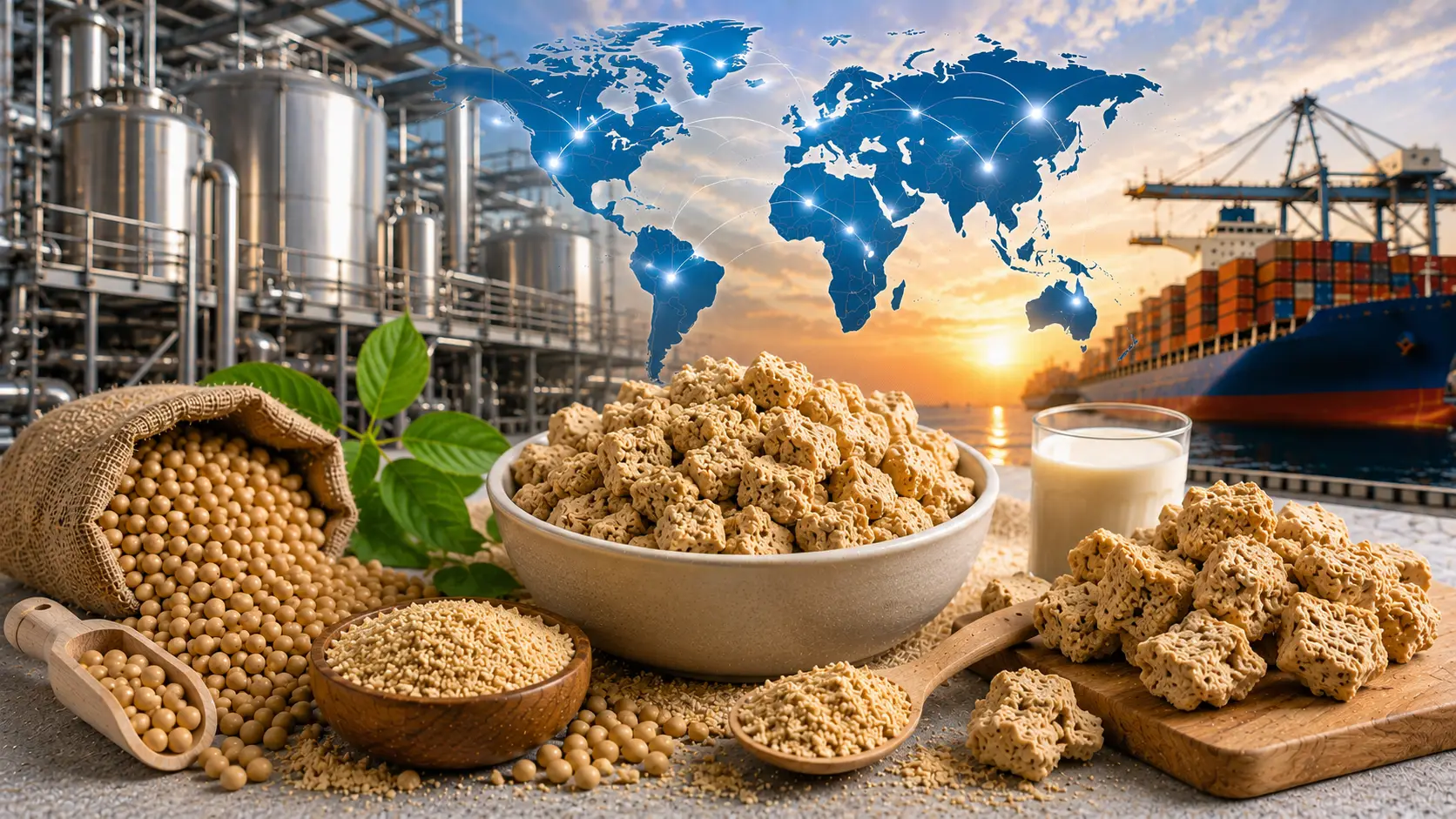
Textured Soy Protein (TSP), also known as Textured Vegetable Protein (TVP), is a processed soy-based ingredient produced from soy protein concentrates or isolates. Through extrusion processing, soy proteins are transformed into a fibrous structure that provides texture, binding ability, and protein functionality for food manufacturing applications.
According to technical information published by the Food and Agriculture Organization of the United Nations, soybeans are an important global protein source because of their nutritional value, versatility, and role in food systems. This makes soy-derived ingredients commercially relevant for manufacturers seeking functional plant-based protein solutions.
Textured Soy Protein is valued by food producers because its structure allows it to absorb flavors, retain moisture, and create meat-like textures in various formulations. These characteristics make it suitable for manufacturers developing protein-rich products with consistent quality and scalable production requirements.
Technical research published in food science literature has highlighted the functional performance of soy proteins in areas such as water absorption, emulsification, and texture modification. These characteristics influence purchasing decisions among food processors evaluating ingredient performance and production efficiency.
The commercial importance of Textured Soy Protein continues to expand as manufacturers search for reliable plant-based ingredients that can support changing consumer preferences. Buyers increasingly evaluate not only protein content but also processing compatibility, supply consistency, and application suitability.
One of the largest application areas for Textured Soy Protein is the production of meat alternative products. Food manufacturers use TSP in products such as plant-based meat substitutes, vegetarian foods, and protein-based prepared meals because it can provide a fibrous texture similar to conventional meat products.
According to research from the Institute of Food Technologists, advances in plant-based food technology have increased interest in ingredients that improve sensory properties and consumer acceptance of alternative protein products.
Textured Soy Protein is also used in processed foods where manufacturers require functional protein ingredients. Applications may include fillings, frozen food products, snack formulations, and prepared meals that require improved texture and nutritional value.
Food companies often select soy protein ingredients based on formulation requirements, production scale, and target markets. The ability of Textured Soy Protein to support different recipes makes it attractive for manufacturers producing diverse food categories.
The growing demand for convenient foods and protein-enriched products continues to influence industrial ingredient selection. Manufacturers increasingly look for suppliers capable of providing consistent-quality ingredients suitable for large-scale food production.
Demand for plant-based protein ingredients has increased as food manufacturers respond to consumer interest in alternative protein sources. Textured Soy Protein benefits from this trend because soy remains one of the most established plant protein ingredients with extensive processing knowledge and supply infrastructure.
Market research organizations have identified alternative proteins as a significant area of development within the global food industry. Reports from organizations such as Good Food Institute highlight continued investment and innovation in plant-based protein technologies.
Food manufacturers are increasingly exploring new formulations that combine nutrition, affordability, and production efficiency. Textured Soy Protein provides a practical ingredient option because it is compatible with existing food manufacturing systems.
According to information from the United States Department of Agriculture, soybeans remain one of the most important agricultural commodities globally, supporting a broad supply chain for food and industrial applications.
As global food markets continue evolving, demand for reliable soy protein sourcing is expected to remain relevant. Buyers increasingly compare suppliers based on quality standards, documentation, availability, and logistics capabilities.
Typical buyers include food manufacturers, plant-based food producers, ingredient distributors, trading companies, and companies developing protein-focused consumer products. These organizations purchase Textured Soy Protein in bulk quantities to support commercial production.
Procurement teams usually evaluate factors such as protein specification, product consistency, certifications, packaging options, supply reliability, and supplier experience. These considerations help companies reduce production risks and maintain product quality.
The global nature of food ingredient supply chains means buyers often compare multiple suppliers before establishing partnerships. Price competitiveness is important, but technical support, documentation, and delivery reliability are also major purchasing factors.
A B2B marketplace such as Tradeasia / Chemtradeasia / Tradechem Marketplace helps connect buyers with suppliers by providing product information, sourcing opportunities, and supplier discovery channels. Product pages support purchasing decisions by helping companies evaluate available options.
Successful sourcing requires buyers to evaluate suppliers based on production capability, quality management systems, export experience, and application knowledge. Reliable suppliers help manufacturers maintain stable operations and meet customer expectations.
Technical documentation, product specifications, and communication efficiency are important parts of industrial ingredient procurement. Buyers often prefer suppliers that understand application requirements rather than simply providing raw materials.
Long-term supplier relationships can help food manufacturers improve supply stability and respond to market changes. Consistent sourcing becomes especially important as demand for alternative protein products expands.
Textured Soy Protein buyers increasingly seek marketplace platforms that simplify supplier comparison and international trade processes. Digital B2B platforms create opportunities for manufacturers, distributors, and traders to discover new supply partnerships.
Textured Soy Protein represents a commercially important ingredient because it connects agricultural supply chains with modern food manufacturing needs. Its applications across multiple food categories create opportunities for suppliers and buyers operating in the global ingredient market.
The value of TSP is determined by application performance, supply reliability, and the ability to meet manufacturing requirements. Companies purchasing this ingredient typically focus on long-term usability rather than short-term availability alone.
Tradeasia / Chemtradeasia / Tradechem Marketplace can position Textured Soy Protein as a searchable industrial ingredient for global buyers looking for sourcing opportunities. By presenting product details and supplier connections, marketplaces help procurement teams identify potential partners.
For manufacturers, distributors, and traders, effective product positioning improves visibility among companies searching for plant-based protein ingredients. As food innovation continues, Textured Soy Protein remains relevant for businesses involved in alternative protein and food processing markets.
Sources
We're committed to your privacy. Tradeasia uses the information you provide to us to contact you about our relevant content, products, and services. For more information, check out our privacy policy.


 English
 Indonesian
 简体字
简体字
 العربية
 Español
 Français
 Português
 日本語
日本語
 한국어
한국어
 Tiếng Việt



















