Explore our network of country and industry based websites to access localized information, product offerings, and business services across our group.
Log in to start sending quotation requests for any product.
Don't have an account? Sign Up Here
Home Black Rice Supply Chain: A B2B Guide to Sourcing and Trade
Trade Insights | Supply Chain | 02 September 2026
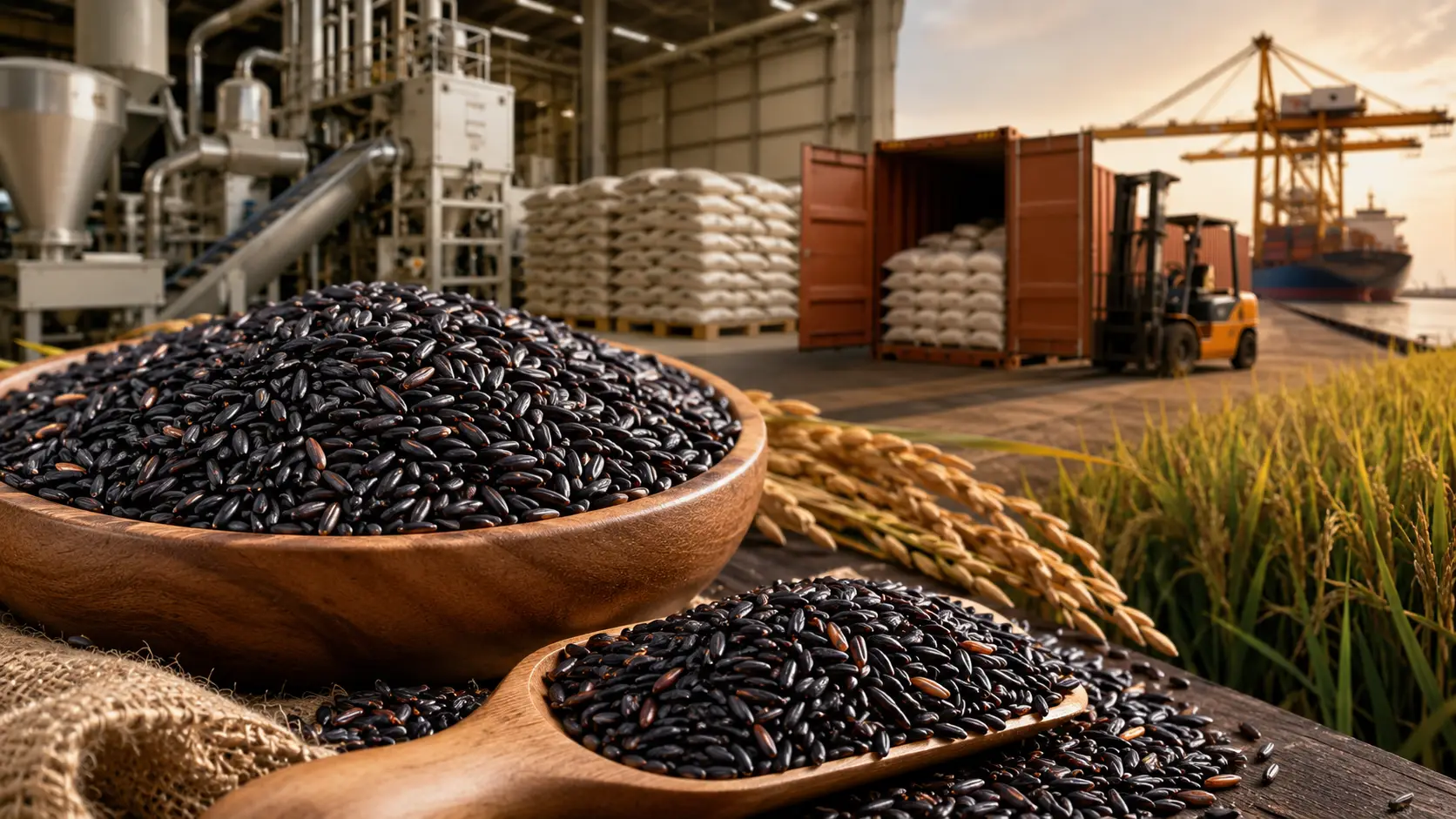
Black Rice in the Modern B2B Supply Chain
Black Rice Sourcing and Supply Origins
Processing and Quality Control Requirements
Applications Driving Black Rice Demand
Logistics, Storage, and International Trade
Buyer Requirements and Procurement Strategy
Black Rice Market Outlook and Supply Chain Opportunities
Conclusion: Building a Reliable Black Rice Supply Network
Sources
Black Rice is a specialty grain positioned within the broader rice and functional food ingredient supply chain. Its naturally dark appearance distinguishes it from conventional white and brown rice, while its characteristic phytochemical profile makes it relevant to food manufacturers developing differentiated grain-based products. For B2B buyers, however, the commercial value of Black Rice extends beyond its nutritional positioning. Consistent availability, specification control, packaging, documentation, and dependable delivery are equally important when evaluating the product for recurring procurement.
Black Rice can move through several stages before reaching an industrial buyer, including cultivation, harvesting, drying, cleaning, grading, processing, packaging, storage, export, import, and distribution. Each stage can influence the final commercial specification. Consequently, buyers purchasing Black Rice in bulk need to assess the complete supply chain rather than focusing exclusively on the quoted commodity price. A supplier offering consistent quality and dependable logistics can provide greater procurement value than a lower-priced source with variable specifications.
The economics of Black Rice are influenced by agricultural availability, crop conditions, processing requirements, origin, order volume, packaging format, transportation costs, and destination-market requirements. Because Black Rice occupies a more specialized position than mainstream rice categories, buyers may also need to account for supplier concentration and the availability of suitable grades. These factors can make supplier qualification particularly important for manufacturers planning regular production.
From a procurement perspective, Black Rice should therefore be evaluated as a supply-chain product rather than simply a grain commodity. Buyers can improve purchasing decisions by comparing specifications, minimum order quantities, lead times, packaging options, documentation, and shipment reliability alongside price. This approach creates a stronger basis for long-term sourcing and reduces the risk of production interruptions caused by inconsistent supply.
Sourcing is one of the most important stages in the Black Rice supply chain because agricultural origin can affect product characteristics, availability, and commercial positioning. Buyers should establish the precise origin of the grain and understand whether the supplier is working directly with producers, processors, exporters, or distributors. Clear traceability becomes especially valuable when Black Rice is being incorporated into branded food products or supplied into markets with demanding documentation requirements.
Supplier selection should begin with a clear product specification. Procurement teams can define the desired grain type, processing condition, moisture expectations, foreign-material limits, packaging requirements, shelf-life expectations, and documentation before requesting quotations. Establishing these parameters early allows buyers to compare suppliers on an equivalent basis instead of selecting a source solely on headline pricing.
Black Rice supply is ultimately connected to agricultural conditions, making crop availability an important consideration for procurement planning. Weather patterns, planting decisions, harvesting conditions, regional demand, transportation infrastructure, and agricultural input costs can all influence supply continuity. A buyer relying on a single source may therefore face greater exposure if that origin experiences a disruption.
A more resilient sourcing strategy can involve qualified alternative suppliers and advance purchasing plans for recurring requirements. For distributors and manufacturers, maintaining visibility over expected consumption is particularly useful because it allows suppliers to plan inventory and shipment schedules more effectively. In this context, a B2B marketplace can help connect buyers with multiple qualified supply options and support more efficient supplier discovery.
The commercial quality of Black Rice depends heavily on post-harvest handling. Cleaning and grading help remove unwanted materials and separate grain according to defined quality parameters. Depending on the intended application, additional processing may be required before the product is packaged for industrial or commercial use. Buyers should understand the processing stage represented by the supplier's quotation because products with similar names may have different specifications.
For food manufacturers, consistency is often more important than a single excellent batch. Uniform appearance, acceptable physical condition, appropriate moisture characteristics, and predictable processing behavior can influence manufacturing efficiency. Suppliers that maintain documented quality-control procedures can provide greater confidence for buyers purchasing repeated shipments.
Quality documentation forms an important link between the physical product and the procurement decision. Depending on the destination and application, buyers may request certificates of analysis, product specifications, origin documentation, food-safety information, packing details, and other compliance records. These documents help procurement and technical teams verify whether the material matches their internal requirements.
Quality control should also continue after shipment. Buyers can establish incoming inspection procedures to compare received material against the agreed specification. Recording batch information, supplier performance, delivery condition, and quality results creates useful procurement data for future sourcing decisions. Over time, this information can help distinguish reliable suppliers from sources that provide inconsistent commercial performance.
Black Rice has commercial potential across food applications where distinctive grain appearance and differentiated ingredient positioning are valuable. It can be incorporated into rice-based meals, specialty grain products, ready-to-eat foods, cereal formulations, bakery concepts, snack products, and other food preparations depending on the required specification and processing characteristics.
Its naturally dark color can also contribute visual differentiation in finished products. For manufacturers, this can support premium or specialty product concepts where consumers are seeking alternatives to conventional grain ingredients. The commercial opportunity is therefore linked not only to the grain itself but also to the ability of processors and brands to translate its distinctive characteristics into finished-product value.
Black Rice is also relevant to specialty food development because it contains naturally occurring anthocyanin compounds associated with its pigmentation. Research continues to investigate the relationship between these compounds, processing, storage, and the physicochemical properties of Black Rice. This makes ingredient selection and processing conditions important considerations for manufacturers developing products around its functional-food positioning.
For B2B buyers, application suitability should be validated rather than assumed from the product name alone. Food developers should evaluate cooking performance, processing tolerance, flavor, appearance, particle or grain characteristics, and finished-product stability according to the intended formulation. Supplier technical information can help shorten this evaluation stage and support more efficient product development.
The international Black Rice supply chain requires coordination between suppliers, freight providers, importers, customs representatives, warehouses, and final buyers. Shipment planning should consider order volume, packaging format, destination requirements, transit time, container availability, and the agreed commercial terms. Poor coordination at any point can create delays that increase inventory costs or disrupt manufacturing schedules.
For recurring buyers, shipment planning should be aligned with actual consumption rather than handled as isolated purchase transactions. Forecast-based procurement can help suppliers prepare inventory while allowing buyers to maintain appropriate safety stock. This is particularly relevant when Black Rice is used as a regular ingredient rather than a seasonal promotional product.
Proper storage is essential for maintaining the commercial quality of Black Rice after arrival. Warehouses should protect the product from excessive moisture, contamination, pests, and unsuitable environmental conditions. Packaging integrity should also be monitored because damaged packaging can compromise product quality during storage and distribution.
Inventory management should balance product availability against unnecessary holding costs. Excess inventory can increase storage exposure and tie up working capital, while insufficient stock can create emergency purchasing requirements. A structured replenishment model based on consumption, lead time, supplier reliability, and expected market demand can provide a more practical approach to Black Rice inventory management.
B2B buyers should evaluate Black Rice suppliers through a combination of technical, commercial, and logistical criteria. Product specification, origin, quality documentation, packaging, minimum order quantity, lead time, payment terms, and delivery capability all contribute to the total procurement decision. Comparing these elements together provides a more realistic assessment of supplier competitiveness.
Procurement teams should also distinguish between spot purchasing and strategic sourcing. Spot buyers may prioritize immediate availability and competitive pricing, while manufacturers with continuous demand generally require greater emphasis on supply continuity, consistency, and predictable delivery. The appropriate supplier profile can therefore differ significantly according to the buyer's business model.
Long-term sourcing relationships can improve supply visibility when both buyer and supplier share realistic forecasts and clear specifications. Regular communication about expected volumes, packaging requirements, delivery schedules, and quality performance can reduce misunderstandings and improve order planning. Supplier performance should be reviewed periodically rather than evaluated only when a shipment problem occurs.
For distributors, another consideration is the ability to source Black Rice in commercially practical quantities for downstream customers. Flexible sourcing can support different customer segments, from food manufacturers requiring recurring industrial volumes to specialty distributors serving smaller food businesses. A reliable marketplace connection can help buyers identify appropriate suppliers without unnecessarily expanding the complexity of their procurement network.
The Black Rice supply chain operates within the wider global rice market, meaning international rice production, trade flows, prices, inventories, and policy developments can influence the broader commercial environment. USDA's August 2026 Rice Outlook continues to track global rice supply, use, trade, and pricing conditions, while FAO maintains dedicated rice market intelligence covering supply, demand, trade, stocks, prices, and policy developments.
These broader indicators matter to Black Rice buyers because specialty rice procurement does not exist independently from agricultural and logistics markets. Changes in freight costs, rice availability, export policies, currency conditions, or regional crop performance can affect sourcing economics. Buyers therefore benefit from monitoring both product-specific supplier information and wider rice-market developments.
The strongest opportunity for Black Rice suppliers and buyers lies in connecting differentiated agricultural products with reliable commercial supply chains. Food manufacturers can use Black Rice to develop specialty grain products, while distributors can expand their portfolios with distinctive ingredients that serve premium and differentiated food categories. The opportunity is strongest when product quality, documentation, supply continuity, and application support are aligned.
For procurement teams, digital B2B sourcing platforms can simplify supplier discovery and comparison. A marketplace environment can make it easier to communicate specifications, identify supply options, request commercial information, and establish relationships with suppliers across relevant markets. For Black Rice, where sourcing quality and supply reliability are central to the purchasing decision, this connectivity can be commercially valuable.
Black Rice presents a specialized sourcing opportunity within the wider rice and food-ingredient supply chain. Its distinctive appearance, food applications, and growing relevance to differentiated product development create opportunities for manufacturers, distributors, importers, and other B2B buyers. Yet successful procurement depends on more than product availability; it requires dependable quality, appropriate specifications, transparent sourcing, efficient logistics, and consistent supplier performance.
A strategic Black Rice procurement program should therefore begin with clear specifications and continue through supplier qualification, quality verification, shipment planning, storage management, and performance monitoring. Buyers that evaluate the entire supply chain can make more informed purchasing decisions and reduce operational risks associated with inconsistent quality or uncertain delivery.
For businesses looking to source Black Rice, the right commercial partner can simplify the transition from product inquiry to dependable supply. Tradeasia International, through its broader Chemtradeasia and Tradechem Marketplace ecosystem, can serve as a B2B connection point for businesses seeking structured sourcing opportunities across international markets.
The value of a marketplace approach is its ability to bring product requirements, supplier discovery, commercial communication, and procurement considerations closer together. For Black Rice buyers, this can support a more transparent and efficient sourcing process while helping suppliers reach relevant industrial and commercial customers.
As specialty food ingredients become increasingly important to product differentiation, reliable supply-chain management will remain a key competitive factor. Businesses that combine clear specifications with qualified sourcing partners can position Black Rice procurement as a strategic component of their food-ingredient portfolio rather than simply another commodity purchase.
We're committed to your privacy. Tradeasia uses the information you provide to us to contact you about our relevant content, products, and services. For more information, check out our privacy policy.


 English
 Indonesian
 简体字
简体字
 العربية
 Español
 Français
 Português
 日本語
日本語
 한국어
한국어
 Tiếng Việt



















