Explore our network of country and industry based websites to access localized information, product offerings, and business services across our group.
Log in to start sending quotation requests for any product.
Don't have an account? Sign Up Here
Home Calcium Sorbate Supply Chain Trends Reshaping Global Food Preservation
Trade Insights | Supply Chain | 13 May 2026
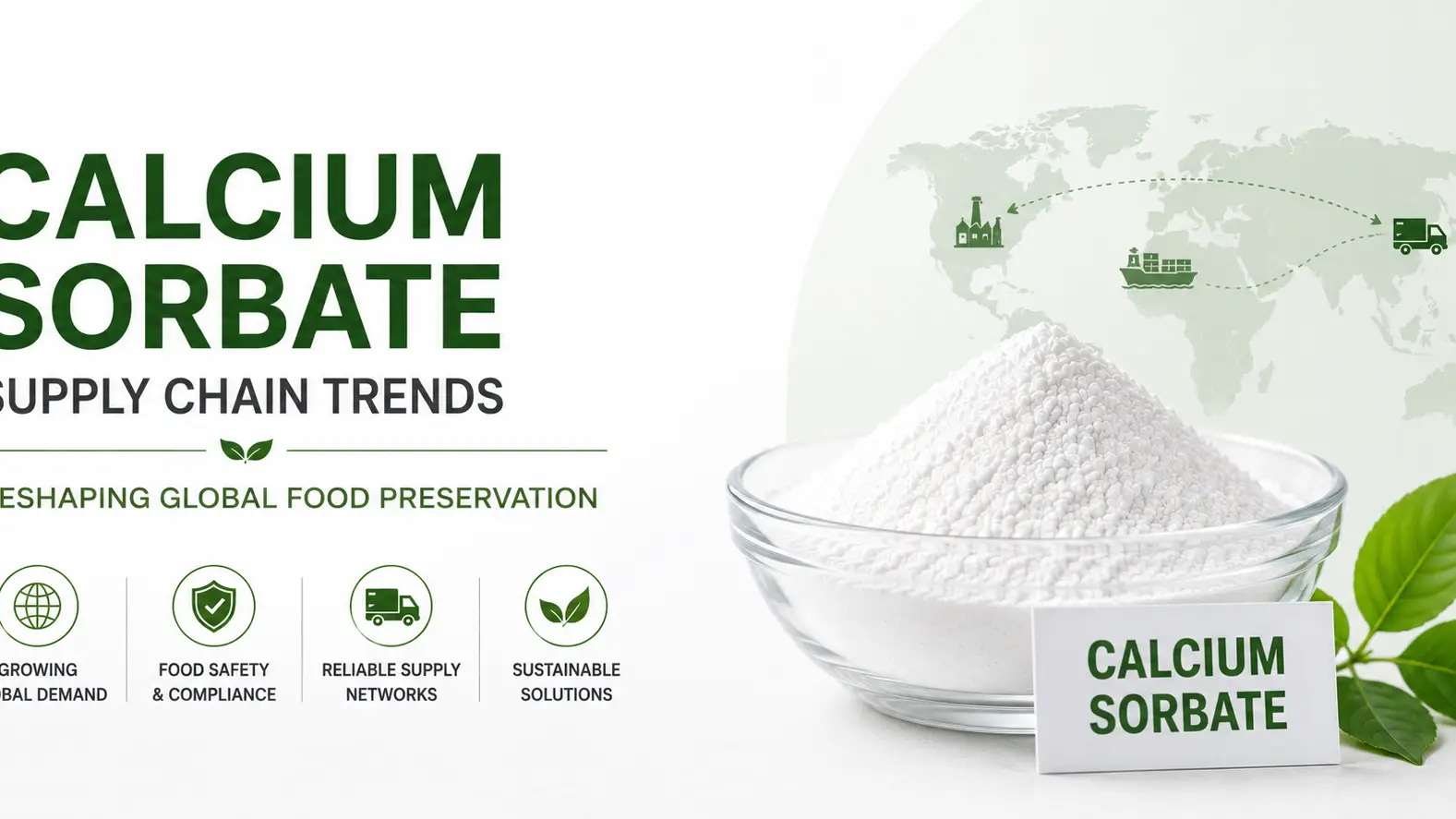
Growing Demand for Food Preservation Solutions
Raw Material Availability and Manufacturing Trends
Logistics Challenges Impacting Calcium Sorbate Distribution
Sustainability Pressures Across Chemical Supply Chains
Regulatory Compliance and International Trade Dynamics
Digital Transformation in Chemical Supply Chain Management
Conclusion
As global food manufacturers continue to prioritize shelf-life stability, clean-label preservation, and international distribution efficiency, calcium sorbate has emerged as an essential additive within the food preservation industry. Widely used as an antimicrobial preservative in bakery products, dairy items, beverages, and processed foods, calcium sorbate supports longer product viability while maintaining safety standards. However, behind this growing demand lies a complex supply chain shaped by raw material sourcing, manufacturing capacity, logistics disruptions, and evolving regulatory requirements.
The calcium sorbate market is increasingly influenced by global trade patterns, sustainability expectations, and regional production shifts. As food supply chains become more interconnected, manufacturers and distributors are seeking resilient sourcing strategies to ensure stable preservative availability across international markets.
The global processed food sector continues to expand rapidly due to urbanization, changing dietary habits, and increasing demand for convenience foods. Calcium sorbate plays a critical role in preserving freshness and preventing microbial contamination during transportation and storage. Food manufacturers are increasingly relying on stable preservative supplies to meet retail and export requirements.
In regions such as Asia-Pacific and North America, demand for packaged bakery and dairy products has accelerated the need for efficient preservative procurement. This trend has encouraged chemical suppliers to strengthen inventory management and improve regional warehousing capabilities to avoid disruptions in food production cycles.
The calcium sorbate supply chain depends heavily on the availability of sorbic acid and calcium-based compounds used during manufacturing. Fluctuations in raw material pricing, energy costs, and industrial chemical production can directly affect market stability.
China remains one of the dominant manufacturing hubs for food preservatives, including calcium sorbate, due to its large-scale chemical production infrastructure. However, manufacturers are diversifying sourcing strategies by expanding partnerships with suppliers across Southeast Asia and Europe to reduce overdependence on single-country supply channels.
At the same time, producers are investing in advanced manufacturing technologies to improve production efficiency, reduce waste generation, and maintain product consistency for food-grade applications.
Global logistics disruptions over recent years have significantly influenced the movement of industrial chemicals and food additives. Port congestion, container shortages, rising freight costs, and geopolitical uncertainties have increased lead times for calcium sorbate shipments.
For food manufacturers operating on tight production schedules, delays in preservative supply can create operational risks and inventory shortages. As a result, many procurement teams are adopting multi-supplier sourcing models and regional distribution networks to improve supply continuity.
Chemical distributors are also focusing on flexible transportation strategies and localized inventory hubs to respond more effectively to changing global trade conditions.
Sustainability has become a central consideration within industrial chemical supply chains. Food manufacturers and regulatory bodies are increasingly evaluating the environmental footprint of preservatives and their sourcing practices.
Calcium sorbate suppliers are now expected to demonstrate responsible manufacturing standards, energy-efficient production methods, and environmentally conscious logistics operations. Companies investing in sustainable packaging, reduced emissions, and transparent sourcing practices are gaining stronger positions within the global market.
This shift aligns with broader environmental, social, and governance (ESG) initiatives that are reshaping procurement decisions across the food processing sector.
Regulatory compliance remains one of the most critical aspects of the calcium sorbate supply chain. Different countries maintain varying food additive regulations, purity standards, and import documentation requirements.
Manufacturers exporting food products internationally must ensure that preservative ingredients comply with standards established by organizations such as the FDA, EFSA, and Codex Alimentarius. Any inconsistency in documentation or quality control can lead to shipment delays and trade restrictions.
Consequently, suppliers with strong technical support capabilities and international certification standards are becoming preferred partners for multinational food producers.
Digitalization is reshaping the way chemical supply chains operate. Advanced inventory tracking systems, predictive analytics, and AI-driven demand forecasting tools are helping calcium sorbate suppliers optimize production planning and improve customer responsiveness.
Real-time visibility across procurement and logistics networks allows companies to minimize disruptions and maintain consistent product availability. Additionally, digital procurement platforms are simplifying communication between buyers, manufacturers, and distributors in global B2B markets.
As the food preservation industry becomes increasingly data-driven, supply chain transparency and operational agility will remain essential competitive advantages.
The calcium sorbate supply chain is evolving alongside broader changes in the global food industry. From sourcing diversification and logistics resilience to sustainability compliance and digital transformation, every stage of the supply network now plays a strategic role in ensuring food preservation reliability. Companies that invest in flexible procurement strategies and trusted supplier relationships will be better positioned to navigate future market uncertainties.
For businesses seeking dependable chemical sourcing solutions, Tradeasia International continues to support global industries through extensive distribution networks, quality-focused supply management, and responsive international trade services tailored to evolving industrial demands.
We're committed to your privacy. Tradeasia uses the information you provide to us to contact you about our relevant content, products, and services. For more information, check out our privacy policy.


 English
 Indonesian
 简体字
简体字
 العربية
 Español
 Français
 Português
 日本語
日本語
 한국어
한국어
 Tiếng Việt



















