Explore our network of country and industry based websites to access localized information, product offerings, and business services across our group.
Log in to start sending quotation requests for any product.
Don't have an account? Sign Up Here
Home Glycine Applications Across Industries: A B2B Guide to Demand and Sourcing
Trade Insights | Supply Chain | 20 July 2026
Understanding Glycine and Its Role in Industrial Supply Chains
Glycine Applications in Food, Animal Feed, and Nutrition Industries
Pharmaceutical and Specialty Chemical Uses Driving Glycine Demand
Market Trends and Commercial Opportunities for Glycine Buyers
Glycine Sourcing Considerations for Manufacturers and Procurement Teams
Why Reliable Glycine Supply Matters for Global B2B Buyers
Conclusion: Building Long-Term Glycine Supply Partnerships
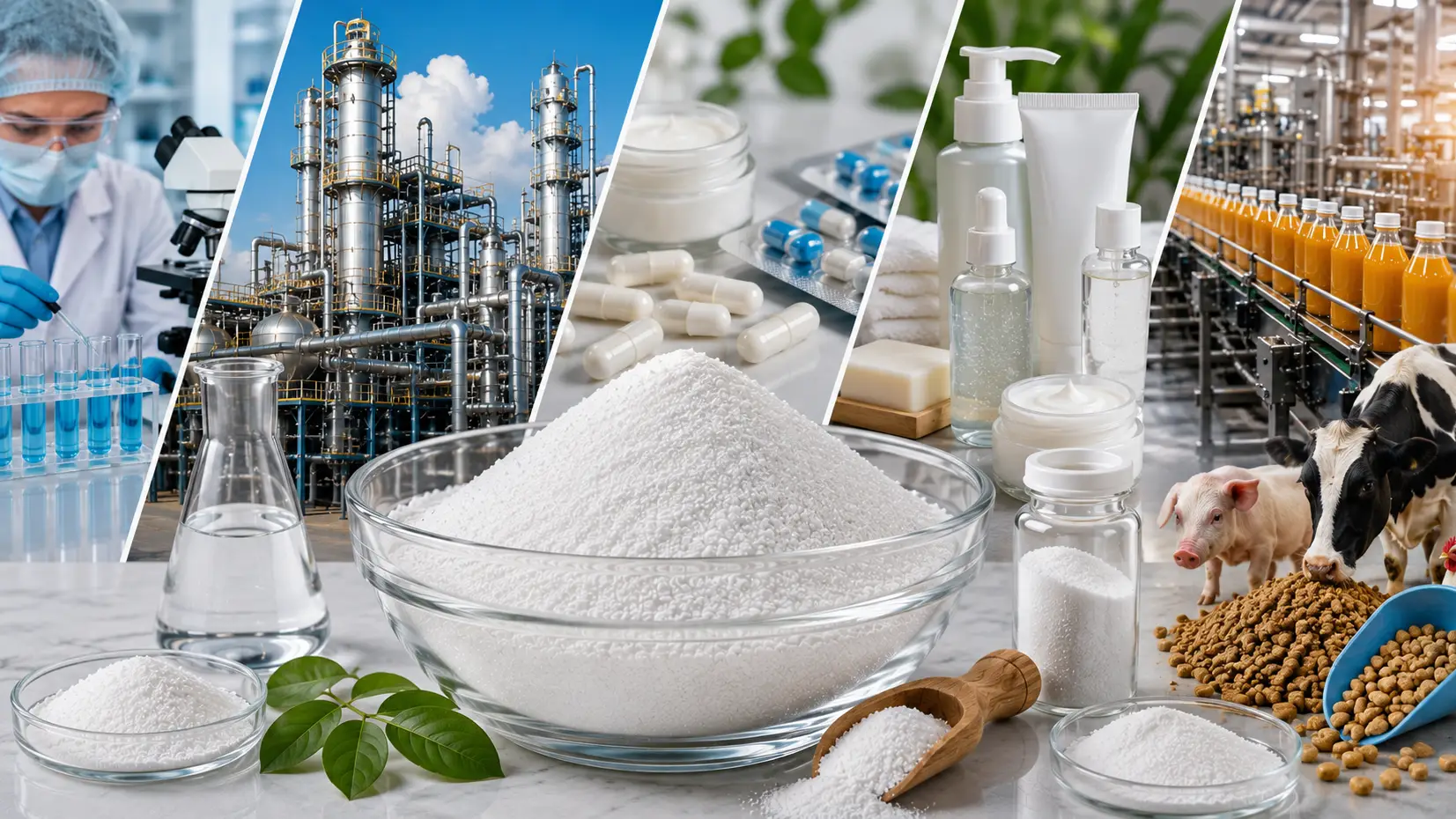
Glycine is a simple amino acid with broad commercial importance across multiple industries due to its functional properties, compatibility with formulations, and suitability for different industrial processes. As the smallest amino acid, glycine is widely used as a raw material and functional ingredient in food, animal nutrition, pharmaceutical, and chemical applications. Its versatility makes it an important product category for manufacturers, distributors, and industrial procurement teams seeking consistent supply solutions.
According to technical information from the National Center for Biotechnology Information, glycine plays essential biological roles as a protein-building amino acid and participates in various biochemical processes. These characteristics support its continued relevance in industries requiring amino acid-based ingredients and specialty chemical materials. (Source: https://www.ncbi.nlm.nih.gov/books/NBK548729/)
For B2B buyers, understanding glycine specifications, grades, and application requirements is important when selecting suitable supply partners. Food manufacturers, feed producers, pharmaceutical companies, and chemical processors often evaluate factors such as purity level, documentation, regulatory compliance, and production consistency before establishing supplier relationships.
The commercial importance of glycine extends beyond individual applications because it connects several industrial value chains. From nutritional formulations to chemical manufacturing processes, demand is influenced by downstream market development, global production capacity, and the ability of suppliers to provide reliable international distribution.
The food industry represents one of the major application areas for glycine, where it is used as an ingredient in formulations requiring flavor enhancement, nutritional support, and functional properties. Food manufacturers may incorporate glycine into products such as seasoning formulations, nutritional products, and processed food applications where amino acid ingredients are required.
Food ingredient buyers typically require suppliers that can provide consistent quality, food-grade specifications, and supporting documentation. As consumer interest in functional nutrition and specialized food formulations continues to increase, ingredient manufacturers are increasingly focused on securing dependable raw material sources.
According to the Food and Agriculture Organization of the United Nations, food production systems continue to evolve toward improved nutritional efficiency and value-added ingredients, supporting demand for functional components used in food manufacturing. (Source: https://www.fao.org/food-systems/en/)
For companies sourcing glycine for food applications, supplier selection involves evaluating product quality, manufacturing standards, logistics capability, and the ability to support international supply requirements. Trade platforms that connect buyers with chemical suppliers can simplify sourcing processes by providing access to industrial product information and supplier networks.
Animal nutrition is another important commercial application for glycine. Feed manufacturers use amino acid ingredients to support balanced nutrition programs for livestock, poultry, aquaculture, and pet food products. The ability to optimize feed composition has increased the importance of amino acid sourcing within global agricultural supply chains.
Feed producers evaluate glycine suppliers based on product consistency, availability, technical specifications, and suitability for large-scale production requirements. Reliable access to feed-grade materials helps manufacturers maintain stable production schedules while meeting formulation needs.
Research published by the National Research Council highlights the importance of amino acids in animal nutrition and feed formulation strategies. Amino acid availability remains a key consideration for improving feed efficiency and supporting animal production systems. (Source: https://nap.nationalacademies.org/catalog/2114/nutrient-requirements-of-animals)
Growing global demand for animal protein and improved livestock productivity continues to influence the commercial outlook for amino acid ingredients. This creates opportunities for suppliers and distributors that can provide dependable glycine supply solutions to feed manufacturers and agricultural businesses.
The pharmaceutical industry uses glycine in various applications due to its chemical properties, compatibility, and role as an ingredient in specialized formulations. Pharmaceutical manufacturers may utilize glycine in products requiring buffering capability, formulation support, or amino acid-based components.
Pharmaceutical buyers generally apply strict supplier evaluation criteria, including quality assurance systems, analytical documentation, traceability, and compliance with relevant manufacturing standards. These requirements make supplier reliability a critical factor in pharmaceutical raw material procurement.
Technical references from the European Medicines Agency emphasize the importance of quality controls and manufacturing consistency for pharmaceutical substances and ingredients. (Source: https://www.ema.europa.eu/en)
For companies purchasing pharmaceutical-grade glycine, working with experienced suppliers can reduce supply chain risks and improve access to consistent materials. A structured sourcing approach helps procurement teams compare available suppliers based on technical capability and commercial suitability.
Beyond food and pharmaceutical uses, glycine also contributes to specialty chemical applications. Its chemical structure allows it to function as an intermediate or supporting material in selected industrial processes, including chemical synthesis and technical formulations.
Industrial chemical buyers often prioritize scalability, supply continuity, and technical support when sourcing raw materials. These factors are particularly important for manufacturers that depend on stable input materials for ongoing production activities.
Market research from Grand View Research indicates that amino acid markets are influenced by expanding applications across food, pharmaceuticals, and industrial sectors. (Source: https://www.grandviewresearch.com/industry-analysis/amino-acids-market)
For specialty chemical companies, glycine represents an adaptable material that can support different manufacturing requirements. Suppliers capable of serving multiple industrial segments can provide added value through flexible supply options and broader market knowledge.
Glycine demand is shaped by several industrial trends, including growth in food ingredient manufacturing, increased focus on animal nutrition efficiency, pharmaceutical development, and specialty chemical production. These applications create diverse demand channels across regional and global markets.
According to market analysis published by Fortune Business Insights, the global glycine market is supported by increasing utilization across pharmaceutical, food, and chemical industries. (Source: https://www.fortunebusinessinsights.com/glycine-market-102347)
For buyers, understanding market drivers helps procurement teams plan purchasing strategies and identify potential supply risks. Factors such as regional production capacity, transportation conditions, and application-specific demand can influence sourcing decisions.
Companies seeking long-term supply partnerships increasingly look for suppliers that understand both product requirements and market conditions. This approach allows manufacturers and distributors to respond more effectively to changing customer demand.
Global chemical trade networks have increased opportunities for buyers to source glycine from international suppliers. Regional differences in manufacturing capacity, logistics infrastructure, and industrial demand create opportunities for distributors and procurement teams to optimize supply channels.
International sourcing requires careful evaluation of supplier credentials, product documentation, shipment capabilities, and communication efficiency. Buyers often compare multiple suppliers to achieve the right balance between quality, reliability, and commercial competitiveness.
Trade marketplaces support this process by connecting industrial buyers with suppliers and providing access to product information. Platforms such as Tradeasia’s Glycine sourcing page help buyers explore product details and sourcing opportunities.
As global industries become more interconnected, companies that establish reliable chemical supply relationships can improve operational resilience and maintain competitive production capabilities.
Selecting the right glycine supplier is an important decision for manufacturers, distributors, and procurement teams because supply reliability directly affects production continuity. Buyers typically assess supplier capability through factors such as product specifications, manufacturing standards, quality documentation, delivery performance, and export experience.
Different industries require different purchasing criteria. Food manufacturers may prioritize food-grade compliance and consistency, while pharmaceutical companies often require stricter documentation and quality assurance procedures. Feed producers and industrial users may focus on availability, scalability, and cost efficiency.
According to technical guidance from the United States Pharmacopeia, quality standards and testing procedures are essential for ensuring the suitability of pharmaceutical ingredients and raw materials. (Source: https://www.usp.org/)
For companies comparing glycine suppliers, a transparent sourcing process helps identify partners that can support both immediate purchasing requirements and long-term supply strategies. Supplier capability, technical knowledge, and logistics performance all contribute to successful procurement outcomes.
Quality assurance is a key factor in industrial chemical sourcing. Glycine buyers commonly evaluate certificates of analysis, product specifications, packaging options, regulatory documentation, and shipment records before approving suppliers.
Supply chain reliability has become increasingly important as manufacturers seek to minimize production disruptions. Factors such as supplier location, inventory availability, transportation networks, and communication responsiveness can influence purchasing decisions.
The International Trade Centre highlights the importance of transparent international trade practices and supplier evaluation in developing effective global sourcing strategies. (Source: https://intracen.org/)
For B2B buyers, working with established chemical marketplaces can improve sourcing efficiency by providing structured product information and connecting procurement teams with potential suppliers. Tradeasia supports this approach by providing access to glycine product information through its Glycine product page for industrial sourcing evaluation.
Reliable glycine supply is important because many industries depend on consistent raw material availability to maintain manufacturing schedules. Food processors, feed producers, pharmaceutical companies, and chemical manufacturers require dependable supply channels to meet customer demand and operational targets.
A disruption in raw material availability can affect production planning, inventory management, and downstream customer relationships. As a result, procurement teams increasingly consider supplier reliability as a strategic factor rather than only a purchasing requirement.
Industry analysis from the Organisation for Economic Co-operation and Development shows that resilient supply chains have become a significant consideration for global industries managing complex trade networks. (Source: https://www.oecd.org/trade/)
For glycine buyers, establishing relationships with capable suppliers helps improve supply visibility and supports more predictable business operations. A strong supply partnership can provide benefits beyond product availability, including technical communication and market awareness.
B2B chemical marketplaces play an important role in improving connections between manufacturers, distributors, and buyers looking for industrial raw materials. By presenting product information in a structured format, marketplaces help procurement teams evaluate available sourcing options more efficiently.
Glycine buyers often require a combination of technical details, application understanding, and supplier accessibility before moving toward purchasing discussions. A marketplace approach supports this decision-making process by bringing product information and commercial sourcing opportunities together.
Tradeasia / Chemtradeasia / Tradechem Marketplace positions glycine as an industrial supply opportunity for companies seeking access to chemical sourcing networks. The Glycine supplier information page provides buyers with a starting point for evaluating product applications and sourcing requirements.
For manufacturers, traders, and distributors, reliable marketplace connections can support broader procurement strategies by improving supplier discovery and enabling more efficient international chemical trade.
Glycine continues to maintain commercial importance because of its wide range of industrial applications across food ingredients, animal nutrition, pharmaceuticals, and specialty chemicals. Its role as a functional amino acid and industrial raw material creates demand from multiple buyer segments worldwide.
For procurement teams, understanding application requirements is essential when selecting suitable glycine grades and suppliers. Buyers that evaluate quality, technical support, and supply capability can make more informed sourcing decisions.
The continued expansion of nutrition-focused products, pharmaceutical development, and industrial manufacturing supports ongoing interest in reliable glycine supply solutions. These market conditions create opportunities for suppliers and distributors that can provide consistent products and professional service.
As global chemical supply chains continue to evolve, companies seeking dependable glycine sources can benefit from working with experienced marketplace partners. Tradeasia’s Glycine product page offers buyers access to product information designed to support industrial sourcing discussions.
Sources
We're committed to your privacy. Tradeasia uses the information you provide to us to contact you about our relevant content, products, and services. For more information, check out our privacy policy.


 English
 Indonesian
 简体字
简体字
 العربية
 Español
 Français
 Português
 日本語
日本語
 한국어
한국어
 Tiếng Việt



















