Explore our network of country and industry based websites to access localized information, product offerings, and business services across our group.
Log in to start sending quotation requests for any product.
Don't have an account? Sign Up Here
Home Japonica Rice Supply Chain & Procurement Guide for Global Buyers Market
Trade Insights | Supply Chain | 23 June 2026
Introduction to the Global Japonica Rice Market
Key Applications Driving Japonica Rice Demand
Global Market Trends and Supply Chain Developments
Procurement Considerations for B2B Buyers
Buyer Intent and Supplier Evaluation Criteria
Commercial Positioning and Sourcing Opportunities
Conclusion
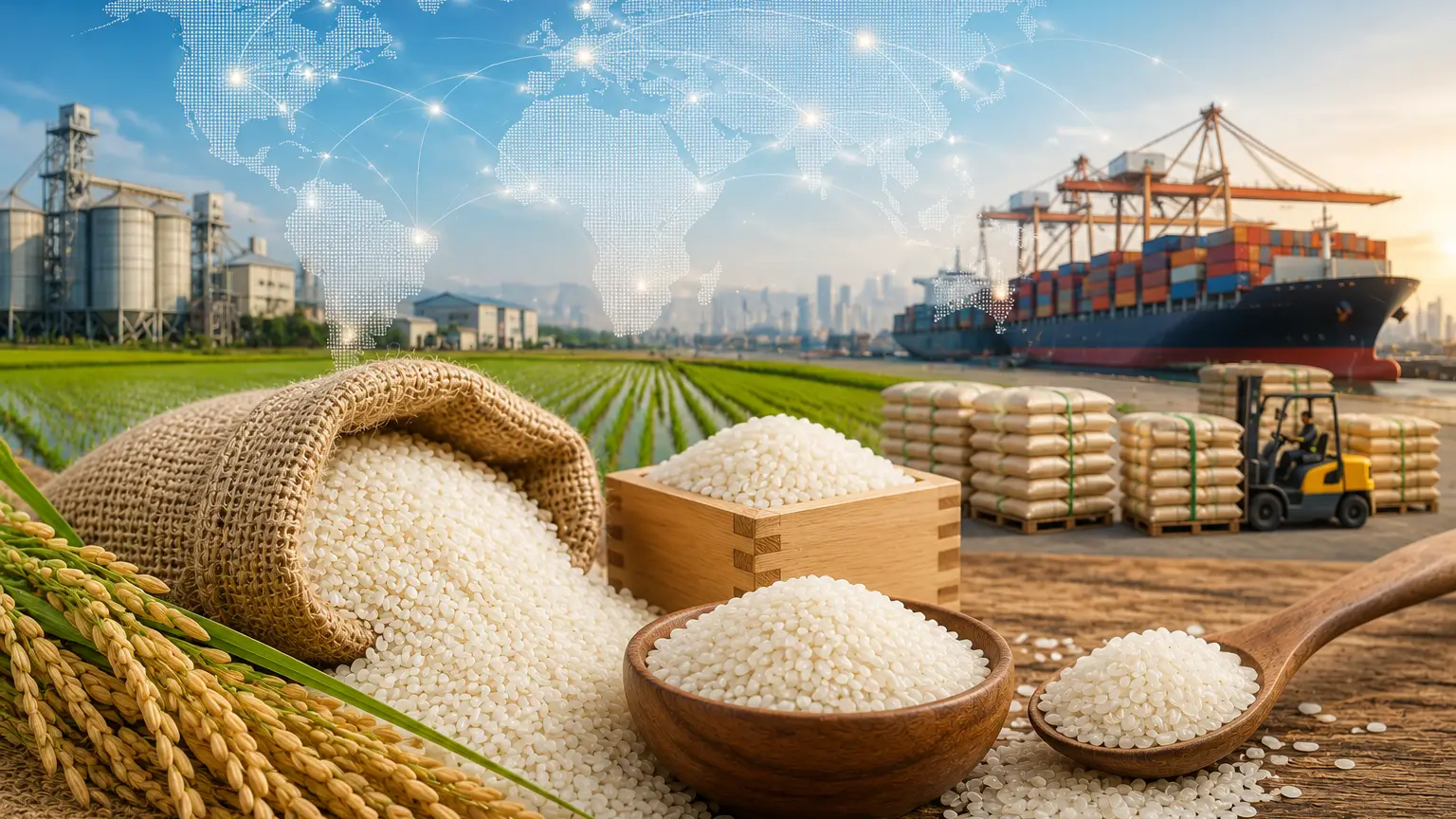
Japonica Rice has evolved from a regionally consumed staple into a globally traded agricultural commodity with increasing importance in food manufacturing, retail distribution, and foodservice operations. Known for its short-grain structure, soft texture, and characteristic stickiness after cooking, the product serves specialized culinary and industrial markets worldwide.
According to the Food and Agriculture Organization (FAO), rice remains one of the world's most important food commodities, with international trade continuing to expand as consumption patterns diversify across regions.
Global demand for premium rice varieties has encouraged greater international movement of Japonica Rice beyond traditional markets such as Japan, South Korea, and China. Importers in North America, Europe, and the Middle East increasingly seek high-quality rice products to meet changing consumer preferences and foodservice requirements.
Market analysis indicates that premium rice categories are benefiting from rising demand for traceable, quality-certified products, creating opportunities for exporters, distributors, and procurement teams seeking reliable supply sources.
The commercial value of Japonica Rice extends beyond household consumption. Its unique cooking properties make it suitable for multiple end-use applications across the food industry, contributing to stable demand throughout the global supply chain.
Food manufacturers increasingly utilize Japonica Rice as a raw material in processed food products, specialty meals, and value-added food ingredients. Its texture and starch characteristics provide advantages in several manufacturing processes.
Restaurants specializing in Japanese, Korean, and fusion cuisine rely heavily on Japonica Rice because of its consistency and presentation quality. Sushi production remains one of the most recognized applications, but demand also extends to ready meals, frozen foods, and premium packaged rice products.
Industry reports indicate growing utilization of Japonica Rice in rice flour production, gluten-free food development, starch-based ingredients, and convenience food manufacturing. These applications support broader growth within the global food processing industry.
Advancements in food technology are encouraging greater use of rice-derived ingredients in specialty food formulations. Processors are exploring starch derivatives, functional food ingredients, and nutraceutical applications that enhance the commercial relevance of Japonica Rice.
Market intelligence published during 2026 highlights increasing interest in value-added processing opportunities, supporting diversification beyond traditional retail consumption channels.
The Japonica Rice market continues to experience structural changes driven by globalization, premiumization, and evolving procurement practices. Supply chain efficiency has become increasingly important as buyers seek dependable sourcing channels and long-term supply security.
According to USDA Rice Outlook reports, rice markets remain closely influenced by production levels, international trade conditions, and changing demand patterns across importing countries.
Consumers across developed and emerging markets increasingly prefer premium rice products that offer superior quality, traceability, and consistent performance. This trend supports stronger demand for Japonica Rice among retailers, hospitality operators, and food manufacturers.
Market studies indicate that premium rice categories are achieving sustained growth as consumers become more willing to pay for differentiated food products and authentic culinary experiences.
Production remains concentrated in Asia-Pacific, creating strategic importance for logistics planning, inventory management, and supplier diversification. Buyers increasingly focus on reducing sourcing risks through multi-origin procurement strategies and long-term supplier relationships.
Industry analysis suggests that supply chain resilience, storage optimization, and contract flexibility are becoming essential components of successful Japonica Rice procurement programs.
Effective procurement requires more than price evaluation. Organizations purchasing Japonica Rice for commercial use must assess quality specifications, supplier reliability, logistics capabilities, and regulatory compliance requirements.
As global supply chains become more interconnected, procurement teams increasingly adopt strategic sourcing frameworks that emphasize long-term value rather than short-term purchasing costs.
Food manufacturers and distributors often evaluate grain size, moisture levels, processing standards, packaging quality, and origin verification before selecting suppliers. Product consistency is particularly important for companies producing branded food products.
Industry sourcing trends show growing demand for certified products that support traceability, food safety compliance, and sustainability objectives. These factors can significantly influence supplier qualification decisions.
Reliable delivery schedules and inventory availability remain critical considerations for procurement professionals. Delays or disruptions can affect production planning, customer commitments, and operational efficiency.
According to market analyses, successful buyers increasingly prioritize suppliers with established export capabilities, transparent logistics networks, and proven experience serving international markets.
Commercial buyers approach Japonica Rice procurement with distinct sourcing objectives that vary according to industry requirements, production needs, and market positioning strategies.
Understanding buyer intent helps suppliers, distributors, and marketplaces provide relevant information that supports purchasing decisions and long-term business relationships.
Typical buyers include food manufacturers, rice importers, wholesalers, retail distributors, foodservice operators, hospitality groups, and processors producing value-added rice-based products. These organizations require consistent supply and dependable product specifications to support commercial operations.
Buyer groups continue to diversify as new applications emerge across food manufacturing, specialty ingredients, and convenience food segments. Market intelligence shows increasing participation from industrial processors seeking functional rice-based ingredients.
Procurement departments commonly compare suppliers based on product quality, pricing structure, origin, certifications, delivery performance, production capacity, and contractual flexibility. Risk management and supply continuity also play important roles during supplier selection.
A comprehensive product page supports sourcing decisions by providing technical information, supply capabilities, application insights, and commercial specifications that assist buyers during supplier evaluation and procurement planning.
Japonica Rice occupies a strategic position within global food supply chains due to its premium characteristics and expanding range of applications. Commercial demand is influenced by both traditional consumption patterns and the growth of value-added food manufacturing sectors.
As international buyers seek reliable supply partners, sourcing platforms and B2B marketplaces play an increasingly important role in connecting buyers with qualified suppliers.
The product's suitability for premium food applications, processed foods, and specialty ingredient markets supports sustained demand from multiple buyer segments. Growth in foodservice, convenience foods, and premium retail categories continues to strengthen commercial opportunities.
Industry reports indicate that rising consumer interest in quality-focused food products is creating favorable conditions for suppliers capable of delivering consistent and traceable Japonica Rice products.
For procurement professionals, sourcing efficiency depends on access to reliable supplier networks, market intelligence, and transparent commercial information. Tradeasia, Chemtradeasia, and Tradechem Marketplace help connect buyers with established supply channels while supporting procurement evaluation and supplier discovery.
By facilitating access to verified sourcing opportunities and global trade networks, marketplace platforms can help buyers improve supplier selection processes and strengthen supply chain resilience without relying on a single sourcing channel.
Japonica Rice continues to gain importance within global food supply chains as demand expands across foodservice, retail, and industrial processing sectors. Premiumization trends, evolving consumer preferences, and growth in value-added food applications are creating new opportunities for manufacturers, distributors, and importers.
For B2B buyers, successful sourcing requires careful evaluation of product quality, supply reliability, logistics capabilities, and supplier credibility. As global trade becomes increasingly interconnected, strategic procurement and marketplace-driven supplier discovery will remain essential components of long-term supply chain success.
Sources
We're committed to your privacy. Tradeasia uses the information you provide to us to contact you about our relevant content, products, and services. For more information, check out our privacy policy.


 English
 Indonesian
 简体字
简体字
 العربية
 Español
 Français
 Português
 日本語
日本語
 한국어
한국어
 Tiếng Việt



















