Explore our network of country and industry based websites to access localized information, product offerings, and business services across our group.
Log in to start sending quotation requests for any product.
Don't have an account? Sign Up Here
Home Global Phosphoric Acid Supply Chain and Strategic Industrial Sourcing
Trade Insights | Supply Chain | 03 August 2026

Understanding the Global Phosphoric Acid Market
Raw Material Availability and Production Network
International Supply Chain Dynamics
Procurement Strategies for Industrial Buyers
Market Challenges and Supply Risks
Future Outlook of the Phosphoric Acid Supply Chain
Conclusion
Sources
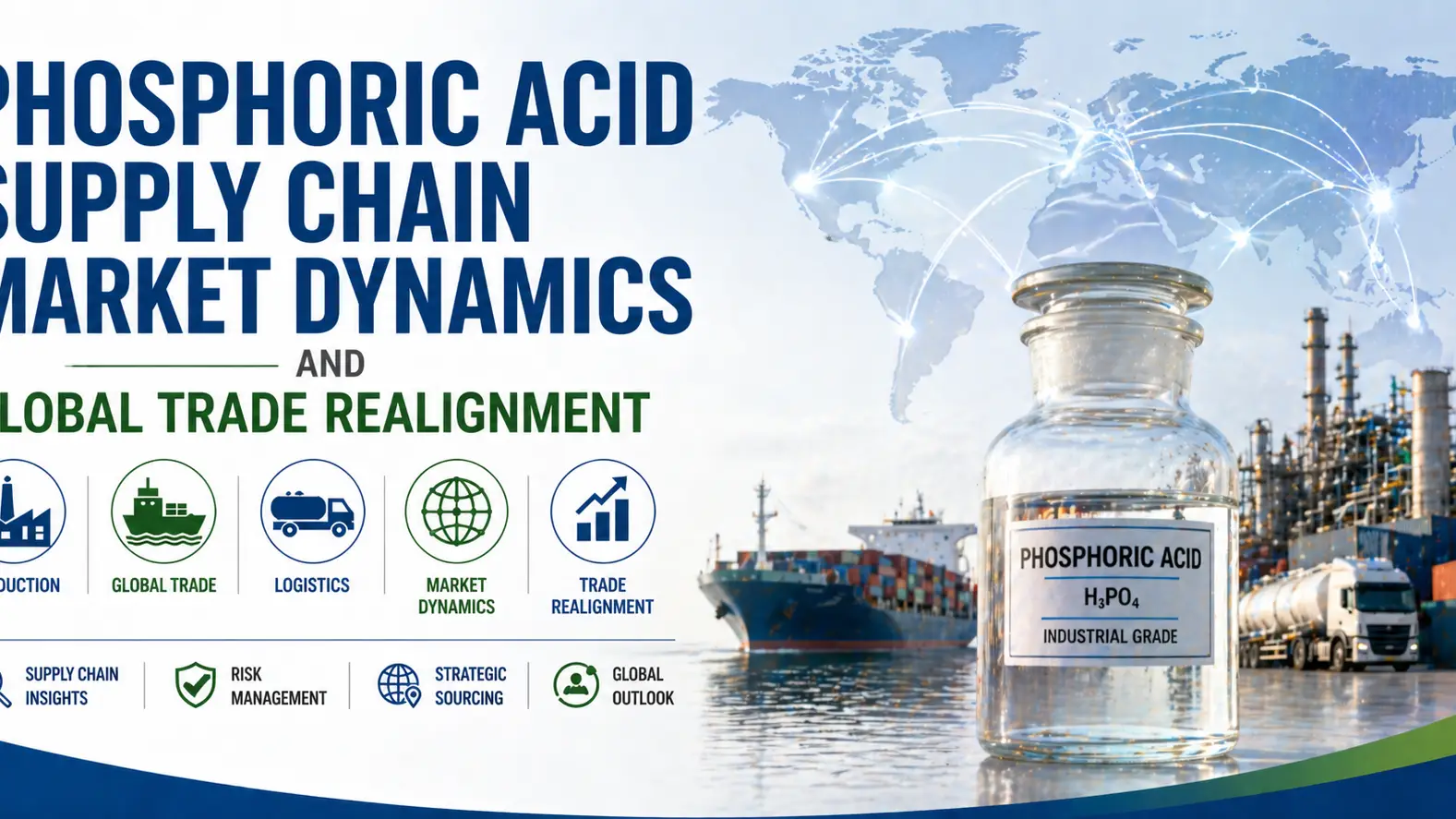
Phosphoric acid remains one of the world's most important industrial chemicals, supporting fertilizer production, food processing, metal treatment, water treatment, and numerous manufacturing industries. As global industrial demand continues to expand, efficient supply chain management has become a competitive advantage for buyers seeking reliable sourcing and stable pricing.
The majority of phosphoric acid production is consumed by fertilizer manufacturers, while industrial-grade material supports food ingredients, pharmaceuticals, electronics, detergents, and specialty chemicals. This broad demand creates a diversified customer base that requires consistent product quality and dependable logistics.
Growing agricultural production, increasing food demand, and expanding industrial activities continue to strengthen international phosphoric acid consumption. Emerging economies are investing heavily in downstream phosphate processing, creating additional opportunities for global suppliers.
As supply networks become increasingly interconnected, procurement professionals are prioritizing suppliers capable of maintaining consistent inventory, regulatory compliance, and flexible shipping solutions across multiple regions.
Phosphoric acid production primarily depends on phosphate rock, sulfur, and sulfuric acid. Countries with abundant phosphate reserves maintain strategic importance within the global chemical supply chain and significantly influence worldwide production capacity.
Integrated manufacturers often benefit from controlling upstream phosphate mining and downstream processing facilities. Vertical integration improves production efficiency while reducing exposure to raw material shortages and transportation disruptions.
Large-scale production facilities continue investing in modern processing technologies that improve operational efficiency, product consistency, and environmental performance. These investments support growing demand while maintaining competitive production costs.
Regional manufacturing hubs across Asia, the Middle East, North Africa, Europe, and North America collectively ensure diversified supply sources for international importers seeking long-term procurement stability.
Global phosphoric acid distribution depends on efficient maritime transportation, storage infrastructure, export regulations, and regional logistics networks. International trade enables manufacturers to reach industrial customers across multiple continents.
Reliable chemical packaging, bulk transportation, ISO tank containers, and dedicated storage terminals help preserve product quality throughout international shipments. Logistics partners play an increasingly important role in maintaining supply reliability.
Procurement teams increasingly diversify sourcing across multiple producing countries to reduce geopolitical risks, shipping delays, and unexpected market disruptions. Supplier diversification also improves purchasing flexibility during periods of market volatility.
Digital procurement platforms and global B2B marketplaces have simplified supplier evaluation, quotation management, and international purchasing, enabling buyers to compare sourcing options more efficiently than traditional procurement methods.
Industrial procurement extends beyond product pricing. Buyers increasingly evaluate supplier capability, logistics expertise, regulatory compliance, technical support, and long-term supply reliability before making purchasing decisions.
Long-term purchasing agreements help stabilize procurement costs while ensuring continuous product availability. Buyers also benefit from suppliers offering multiple origin options and flexible shipment schedules.
Quality certifications, documentation accuracy, product traceability, and responsive customer service have become essential supplier evaluation criteria. Reliable suppliers reduce operational risks and simplify import procedures for international customers.
Strategic sourcing partnerships create greater supply resilience by supporting inventory planning, forecasting accuracy, and efficient coordination between manufacturers, distributors, and end users throughout the procurement cycle.
The phosphoric acid supply chain faces ongoing challenges resulting from raw material availability, freight costs, environmental regulations, energy prices, and changing international trade policies.
Price fluctuations in phosphate rock and sulfur directly influence phosphoric acid manufacturing costs. Transportation expenses and regional port congestion may further impact procurement budgets and delivery schedules.
Environmental compliance requirements continue encouraging manufacturers to modernize production facilities while reducing emissions and improving sustainability. These investments may influence production economics over the long term.
Successful procurement organizations continuously monitor supplier performance, inventory levels, market intelligence, and geopolitical developments to minimize supply disruptions and maintain operational continuity.
Global investment in agriculture, industrial manufacturing, battery materials, and specialty chemicals is expected to support long-term phosphoric acid demand. Supply chain modernization remains a priority for producers and distributors worldwide.
Digital supply chain management, predictive demand forecasting, and real-time logistics visibility are improving procurement efficiency across international chemical markets. Companies increasingly leverage digital technologies to optimize sourcing decisions.
Sustainability initiatives encourage manufacturers to improve resource utilization, enhance production efficiency, and strengthen environmental stewardship throughout the phosphate value chain. Buyers increasingly incorporate sustainability into supplier selection criteria.
As international trade expands, organizations capable of providing diversified sourcing, reliable logistics, and responsive commercial support will remain preferred partners for industrial procurement teams seeking supply security.
Phosphoric acid continues to play a vital role across global industrial supply chains due to its extensive applications and strong international demand. Successful procurement depends on selecting suppliers that combine consistent product quality, diversified sourcing capabilities, reliable logistics, and comprehensive regulatory compliance.
Tradeasia International supports industrial buyers by connecting global manufacturers with reliable sourcing solutions through an established international chemical distribution network. With expertise in procurement, logistics coordination, and market knowledge, Tradeasia helps customers secure dependable phosphoric acid supplies while improving purchasing efficiency and long-term supply chain resilience.
We're committed to your privacy. Tradeasia uses the information you provide to us to contact you about our relevant content, products, and services. For more information, check out our privacy policy.


 English
 Indonesian
 简体字
简体字
 العربية
 Español
 Français
 Português
 日本語
日本語
 한국어
한국어
 Tiếng Việt