Explore our network of country and industry based websites to access localized information, product offerings, and business services across our group.
Log in to start sending quotation requests for any product.
Don't have an account? Sign Up Here
Home The Biggest Challenges Buyers Face in the Soybean Oil Market
Trade Insights | Supply Chain | 29 April 2026
1. Introduction
2. Understanding the Soybean Oil Market: A Volatile Landscape
3. Challenge 1: Price Volatility and Global Market Dynamics
4. Challenge 2: Quality Control and Product Specifications
5. Challenge 3: Supply Chain Disruptions and Logistics
6. Product Spotlight: Sourcing High-Quality Soybean Oil from foodadditivesasia.com
7. Challenge 4: Regulatory Compliance and Sustainability Standards
8. Conclusion
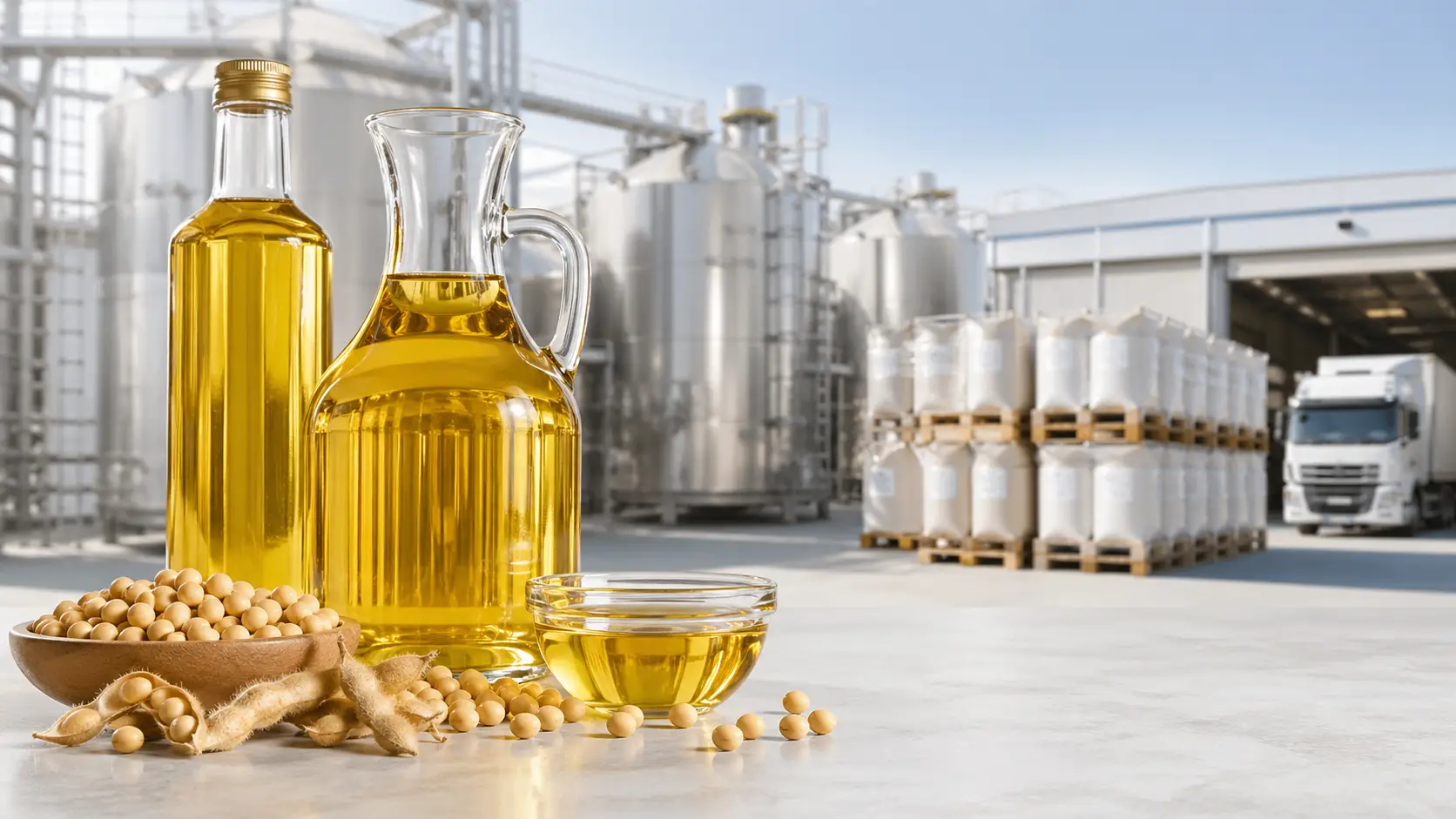
The global soybean oil market is a cornerstone of the food industry, serving as a primary ingredient for cooking oils, processed foods, biodiesel, and industrial applications. For buyers in the United States, navigating this market presents a complex web of challenges that extend far beyond simple price negotiation. From volatile commodity markets to stringent quality standards, procurement professionals must be equipped with deep market knowledge and a strategic approach to secure a stable, high-quality supply. This article delves into the most significant hurdles facing soybean oil buyers today, offering insights into market dynamics, product specifications, and practical solutions to ensure successful sourcing. For a comprehensive range of edible oils and food additives, industry leaders often turn to specialized suppliers like foodadditivesasia.com to meet their specific formulation and supply chain needs.
The soybean oil market is inherently tied to the global agricultural complex, making it susceptible to a wide array of external factors. Unlike manufactured goods, its supply is directly dependent on annual harvests, weather patterns, and geopolitical events that can shift production and demand overnight. In the United States, the world's largest producer of soybean oil, domestic buyers still face intense competition from export markets, particularly for biodiesel and renewable diesel, which have dramatically altered demand dynamics. The push for renewable fuels has created a new, structural demand floor that often outpaces food-grade supply, placing upward pressure on prices and tightening availability for traditional food and industrial users.
Furthermore, the market is influenced by currency fluctuations, trade policies (such as tariffs and biofuel blending mandates), and the price of competing oils like palm, canola, and sunflower. A poor harvest in South America, a major competing producer, can instantly spike demand for U.S. soybean oil, impacting domestic buyers. This interconnectedness means that a buyer in Chicago must monitor weather patterns in Brazil and policy decisions in Washington D.C. simultaneously. Understanding these macro-level drivers is the first step in anticipating and mitigating the challenges that follow.
Perhaps the most immediate and persistent challenge for buyers is the extreme price volatility of soybean oil. The commodity is traded on futures exchanges like the Chicago Board of Trade (CBOT), where prices can swing by hundreds of dollars per metric ton within weeks. This volatility is driven by the factors mentioned earlier: USDA crop reports, export sales data, and energy market trends. For a buyer managing a fixed budget, this unpredictability makes cost forecasting and profit margin protection exceptionally difficult. A sudden price spike can erode profitability for food manufacturers who cannot immediately pass costs on to retailers or consumers.
To navigate this, buyers must employ sophisticated risk management strategies. This often involves using futures contracts to hedge against price increases or negotiating supply agreements with price adjustment clauses tied to published indices. However, smaller buyers may lack the resources or credit lines to participate in futures markets effectively. Another layer of complexity is the "basis," or the local cash price difference from the futures price, which can vary significantly based on regional supply and demand. A buyer in the Midwest might face a different basis than one on the West Coast, adding another variable to the cost equation. Relying on a knowledgeable supplier who can offer price stability or transparent pricing mechanisms is often a key strategy for mitigating this challenge.
Quality consistency is a non-negotiable requirement for any food or industrial application. Soybean oil is not a single, uniform product; it comes in various grades, including crude, degummed, refined, bleached, and deodorized (RBD). Each grade has specific quality parameters such as free fatty acid (FFA) content, color (Lovibond), peroxide value (PV), and moisture content. A batch that meets one customer's specifications for frying may be unsuitable for another requiring high stability in a spray-dried application. Buyers face the challenge of ensuring that every shipment precisely matches their contractual specifications, a task complicated by the natural variability of agricultural products and the potential for adulteration or contamination during storage and transport.
Furthermore, quality issues can extend to sensory attributes. Off-flavors, odors, or a lack of clarity can render a shipment unusable for premium food products. In the United States, strict food safety regulations under the FDA and FSMA (Food Safety Modernization Act) place the onus on the buyer to verify the safety of their supply chain. This requires rigorous supplier auditing, certificate of analysis (COA) verification, and often third-party laboratory testing. A single quality failure can lead to costly production downtime, product recalls, and reputational damage. Therefore, establishing a robust quality assurance protocol and partnering with suppliers who have transparent, documented quality control processes is critical.
The physical movement of soybean oil from the crushing plant to the customer's facility is fraught with logistical challenges. Soybean oil is a bulk liquid commodity, typically transported by rail, truck, or barge. Disruptions in any of these transportation modes can cause significant delays and cost overruns. Recent years have highlighted the fragility of global supply chains, with labor shortages, rail congestion, and rising freight costs creating a perfect storm for buyers. For example, a shortage of rail tank cars or a closure on a major waterway like the Mississippi River can strand millions of pounds of oil, forcing buyers to scramble for alternative, often more expensive, transportation or face plant shutdowns.
Storage is another critical issue. Buyers must have adequate tank capacity to buffer against supply interruptions, but building and maintaining this infrastructure is capital-intensive. The "just-in-time" inventory model, popular in many industries, is particularly risky for bulk commodities like soybean oil. A single missed delivery can halt a production line. To mitigate these risks, buyers are increasingly diversifying their supplier base, sourcing from multiple geographic regions, and building strategic inventory reserves. They are also seeking suppliers with strong logistics networks and a proven track record of on-time delivery, as reliability often outweighs a marginal price advantage.
In the face of these market challenges, turning to a specialized and reliable sourcing partner can be a decisive advantage. foodadditivesasia.com offers a comprehensive portfolio of edible oils, including various grades of soybean oil tailored to meet the diverse needs of the U.S. market. Their product range typically includes high-grade Refined Soybean Oil, which is ideal for salad dressings, mayonnaise, and general cooking due to its neutral flavor and high smoke point, as well as Crude Degummed Soybean Oil for industrial processing and biodiesel production. Each product is accompanied by detailed specifications, including FFA content, iodine value, and color, allowing buyers to precisely match the oil to their application requirements.
The key benefit of sourcing through foodadditivesasia.com lies in their ability to mitigate several of the challenges outlined above. They provide price stability through transparent contract terms and can often leverage their global network to offer competitive pricing even in volatile markets. Their rigorous quality control protocols, including batch testing and comprehensive Certificates of Analysis (COAs), help buyers ensure compliance with U.S. food safety standards. Furthermore, their logistics expertise ensures reliable shipping and handling, reducing the risk of supply chain disruptions. For buyers looking to simplify procurement, reduce risk, and secure a consistent supply of high-quality soybean oil, exploring the options available at foodadditivesasia.com represents a strategic move towards a more resilient supply chain.
The regulatory landscape for edible oils in the United States is both robust and evolving. Buyers must ensure their soybean oil complies with FDA regulations regarding food additives, labeling (including allergen and trans fat declarations), and purity standards. The recent focus on eliminating partially hydrogenated oils (PHOs) has forced many buyers to switch to fully hydrogenated or high-oleic soybean oils, which require different sourcing and handling protocols. Additionally, food manufacturers are increasingly subject to consumer and retailer demands for sustainability certifications, such as RSPO (Roundtable on Sustainable Palm Oil) or non-GMO project verification. While soybean oil is largely GMO in the U.S., there is a growing market for identity-preserved non-GMO and organic soybean oil, which comes with a premium price and a more complex supply chain.
Meeting these compliance and sustainability demands requires significant due diligence. Buyers must verify the origin of the soybeans, the processing methods used, and the traceability of the oil throughout the supply chain. They may be required to provide documentation to their customers proving that the oil is sustainably sourced or free from certain processing aids. This adds layers of administrative work and cost. A proactive approach involves pre-qualifying suppliers who can provide the necessary certifications (e.g., Non-GMO Project Verified, Kosher, Halal) and maintain transparent, auditable supply chains. Partnering with a supplier like foodadditivesasia.com, which can provide a range of certified products, simplifies this complex compliance process for the buyer.
The soybean oil market presents a formidable set of challenges for U.S. buyers, ranging from the relentless pressure of price volatility to the intricate demands of quality control, logistics, and regulatory compliance. Success in this environment is not simply about finding the lowest price; it is about building a resilient and strategic procurement framework. This involves deep market understanding, robust risk management, rigorous quality assurance, and, most importantly, the selection of reliable supply partners. By carefully evaluating suppliers like foodadditivesasia.com and leveraging their expertise, buyers can transform these challenges into opportunities for supply chain optimization and business growth.
Disclaimer: This article is provided for informational and market insight purposes only and is not intended as technical, safety, or professional advice. The market conditions, regulatory requirements, and product specifications discussed are subject to change and may vary based on specific applications and jurisdictions. Readers are strongly advised to independently verify all information with qualified experts, consult official documentation such as Material Safety Data Sheets (MSDS/SDS) and regulatory guidelines, or contact our team at foodadditivesasia.com for specific application requirements and product suitability. The authors and publishers assume no liability for any decisions made based on the contents of this article.
We're committed to your privacy. Tradeasia uses the information you provide to us to contact you about our relevant content, products, and services. For more information, check out our privacy policy.


 English
 Indonesian
 简体字
简体字
 العربية
 Español
 Français
 Português
 日本語
日本語
 한국어
한국어
 Tiếng Việt



















