Explore our network of country and industry based websites to access localized information, product offerings, and business services across our group.
Log in to start sending quotation requests for any product.
Don't have an account? Sign Up Here
Log in now to access technical product documents from our product range.
Don't have an account? Sign Up Here
Home All Products Tartaric Acid (E334)
|
Origin |
: China |
|
IUPAC Name |
: 2,3-Dihydroxybutanedioic Acid |
|
Cas Number |
: 87-69-4 |
|
HS Code |
: 2918.12.00 |
|
Formula |
: HOOC(CHOH)2COOH |
|
Appearance Name |
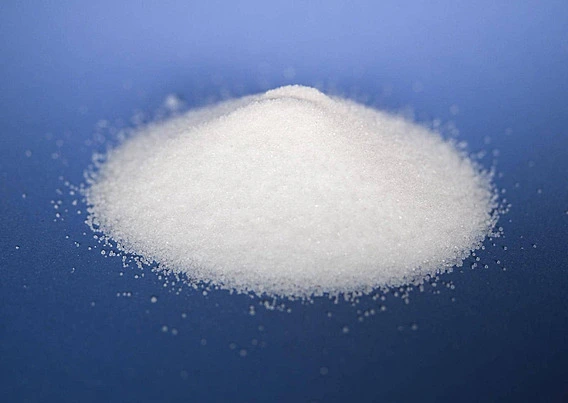
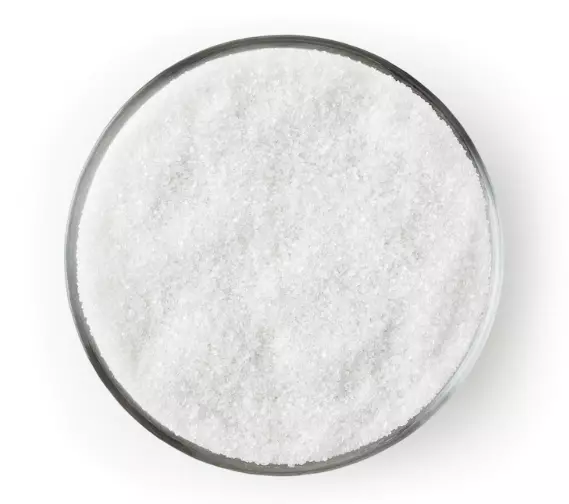
: White Crystalline Powder |
|
Common Names |
: Tartaric Acid |
|
Packaging |
: 25 kg HDPE bag, 25 kg paper bag |
For more detailed information including pricing, customization, and shipping:
Tartaric acid is a chiral dicarboxylic acid (2,3-dihydroxybutanedioic acid) serving primarily as acidulant (solids acidity 11.5% as citric acid equivalent), leavening agent (CO₂ generator with bicarbonates at pH>5.5), stabilizer, and sequestrant through selective calcium/magnesium chelation—providing sharp tart flavor, pH reduction (1.8% solution pH 2.0), antioxidant synergy, and exceptional thermal stability up to 200°C across food processing. In the food industry, it delivers precise acidity control, microbial stability, and functional synergy ideal for beverages, confectionery, bakery leavening, wine stabilization, and emulsion systems at 0.1-3% usage.
Beverages: Primary acidulant in carbonated soft drinks, fruit juices, powdered drink mixes, and effervescent tablets (0.2-1%) generating rapid CO₂ fizz with sodium bicarbonate, maintains target pH 2.8-4.0 preventing microbial growth, synergizes with benzoate/sorbate preservatives through undissociated acid form.
Confectionery: Essential souring agent in hard boiled candies, fruit chews, gums, jellies, and liquorice (0.5-2%) providing bright tartness and crystal clarity, prevents sucrose inversion during high-temperature boiling (145-150°C), controls moisture migration preventing stickiness during 12-month ambient storage.
Bakery products: Leavening acid with baking soda (3:1 molar ratio) producing controlled CO₂ release for cakes, cookies, muffins, and quickbreads; as cream of tartar (1-2%) stabilizes whipped egg whites through protein interactions preventing collapse during meringue baking at 110-120°C, extends crumb softness through starch gelatinization control.
Wine production: Cold stabilization agent precipitating potassium bitartrate crystals (0.5-2g/L addition) preventing sediment formation during bottle aging, adjusts titratable acidity (5-8g/L) for varietal balance, chelates iron preventing ferric casse haze.
Jams, jellies, marmalades: Synergistic with pectin (0.3-0.8%) lowering gelation pH to 3.2-3.5 optimum, enhances fruit flavor brightness, sequesters metal ions preventing enzymatic discoloration, heat-stable through hot-fill processing at 95°C.
Processed cheese and emulsions: Emulsifying salt (2-4%) forming sodium/calcium tartrate complexes improving casein dispersion and melt fluidity preventing fat separation during heating to 80-90°C, provides smooth stretchy texture.
In pharmaceuticals, generates effervescent tablets (Alka-Seltzer) and improves bioavailability through solubility enhancement; in cosmetics, exfoliates (AHA properties) and stabilizes emulsions as anionic surfactant counterion; in construction, retards cement hydration (0.1-0.3%) extending workability window; in metal finishing, chelates/polishes stainless steel through complex formation; in photography, develops film by controlling silver ion precipitation.


 English
 Indonesian
 简体字
简体字
 العربية
 Español
 Français
 Português
 日本語
日本語
 한국어
한국어
 Tiếng Việt