Explore our network of country and industry based websites to access localized information, product offerings, and business services across our group.
Log in to start sending quotation requests for any product.
Don't have an account? Sign Up Here
Home What Is Potassium Sorbate? A Complete Guide to Its Function and Safety in Foods
Article | 09 December 2025
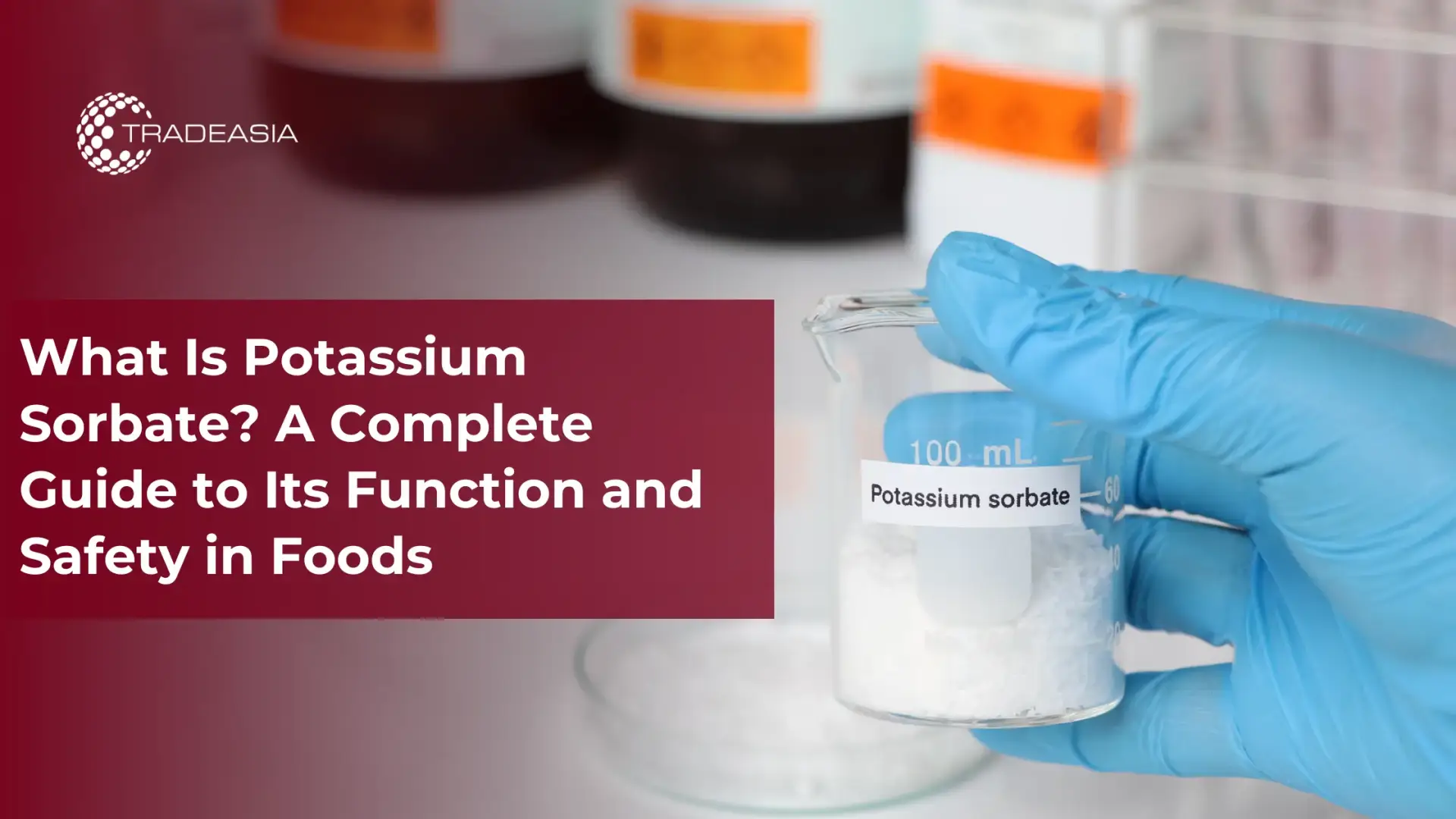
Potassium Sorbate is the potassium salt of sorbic acid, widely used as a food preservative to inhibit the growth of molds, yeasts, and some bacteria. It appears as a white, odorless, water-soluble crystalline powder. Because it does not significantly affect the taste, smell, or appearance of foods at permitted levels, it has become one of the most widely used preservatives in global food manufacturing.
This ingredient is especially effective in mildly acidic to acidic foods. Its stability, affordability, and broad antimicrobial spectrum make it a go-to additive for many producers across bakery, dairy, beverages, and fruit-based products.
• Antimicrobial Protection
Potassium sorbate releases sorbic acid when dissolved in water. Sorbic acid is the active form that prevents mold, yeast, and certain bacteria from growing. This slows down spoilage and extends shelf life, making food safer and fresher for longer.
• Sensory Neutrality and Versatility
Unlike many preservatives that affect flavor or aroma, potassium sorbate has minimal sensory impact. This makes it highly suitable for delicate foods such as cheeses, dairy beverages, fruit juices, and baked goods where flavor preservation is crucial.
Its effectiveness across a wide pH range — especially acidic products — contributes to its versatility.
• Shelf-Life Extension
By preventing microbial spoilage, potassium sorbate helps manufacturers maintain product quality throughout distribution, while also reducing product waste. Consumers benefit from products that stay fresh longer without significant changes in taste or texture.
Potassium sorbate is widely used in:
Baked goods such as bread, cakes, and pastries to prevent mold growth.
Dairy products including cheese, yogurt drinks, and sour cream.
Beverages like fruit juices, soft drinks, wine, and cider to prevent yeast growth and unwanted fermentation.
Sauces and condiments including mayonnaise, salad dressings, syrups, jam, and pickled products.
Processed fruits and vegetables, especially those stored in acidic environments.
Its broad compatibility makes it one of the most flexible preservatives in commercial food processing.
Potassium sorbate is considered safe by major international regulatory bodies when used within permitted limits.
The U.S. FDA recognizes it as GRAS (Generally Recognized as Safe).
EFSA approves it as food additive E202.
Typical usage levels range around 0.025% to 0.10%, depending on the food type.
The body metabolizes potassium sorbate into water and carbon dioxide, making it low in toxicity and non-accumulative.
For producers, the key requirement is adherence to good manufacturing practices and legal limit values. For consumers, it remains one of the safest and most studied preservatives available.
Potassium sorbate continues to be widely adopted due to:
Strong antimicrobial effectiveness
Low sensory impact
Wide food compatibility
Regulatory acceptance worldwide
Cost-effectiveness and ease of incorporation
As consumer demand increases for safe, stable foods without overly aggressive chemical preservatives, potassium sorbate remains a trusted ingredient in modern food manufacturing.
Source
https://www.tengerchemical.com/news/potassium-sorbate-in-food-1612.html
https://kemmie.com.au/blogs/news/what-is-potassium-sorbate-safe-food-preservation-explained
We're committed to your privacy. Tradeasia uses the information you provide to us to contact you about our relevant content, products, and services. For more information, check out our privacy policy.


 English
 Indonesian
 简体字
简体字
 العربية
 Español
 Français
 Português
 日本語
日本語
 한국어
한국어
 Tiếng Việt




















